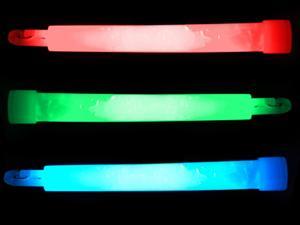
How does temperature change how long a glow stick shines? Glow sticks produce light through a chemical reaction (two substances mixing inside the tube). Heat speeds up chemical reactions. Cold slows them down.
You place activated glow sticks in five beakers of water ranging from 5°C to 45°C. Then you time how long each one glows. Five sticks go into each beaker to get an average.
Sticks in warm water glow brighter but burn out fast, lasting only 27 minutes at 45°C. Sticks in cold water glow dimly but last over four hours at 5°C. The tradeoff between brightness and duration is dramatic.
Hypothesis
The hypothesis is that the light from a glow stick will extinguish more quickly at higher temperatures.
Heat speeds up chemical reactions, but a faster reaction also finishes sooner. You place activated glow sticks in beakers of water ranging from 5°C to 45°C, then time how long each one shines. Sticks in warm water glow brighter but burn out fast, lasting only 27 minutes at 45°C. Sticks in cold water glow dimly but last over four hours at 5°C. The tradeoff between brightness and duration is dramatic.
Glow sticks produce light through a chemical reaction — two substances mix inside the tube, and that reaction releases energy as light instead of heat. Temperature controls how fast that reaction runs. Warm water speeds it up, so sticks in a 45°C beaker glow brighter but burn out in just 27 minutes. Cold water slows the reaction down, so sticks in a 5°C beaker glow dimly but last over four hours. The tradeoff between brightness and duration is dramatic.
Method & Materials
You will label five beakers with different temperatures, add water and glow sticks to each beaker, and measure the time it takes for the glow sticks to stop glowing.
You will need five beakers, 1500ml of distilled water, a measurement cylinder, 25 glow sticks, a stopwatch, two hot plates, five thermometers, and a bag of ice.
MEL Chemistry — hands-on chemistry experiment kits delivered monthly — great for building lab skills at home. (Affiliate link)
The results showed that the glow sticks in the warmer waters glowed brighter but they also extinguished the fastest. The glow sticks in cold water were dimmer but continued to produce light the longest.
Why do this project?
This science project is interesting because it shows how temperature can affect the light from glow sticks.
Also Consider
Consider repeating the experiment using different colored glow sticks and compare their glow time. Also, try the experiment with different sized and shapes of glow sticks.
Full project details
Additional information and source material for this project are available below.