

Color Vision in Dogs, Cats, and Monkeys
Hard
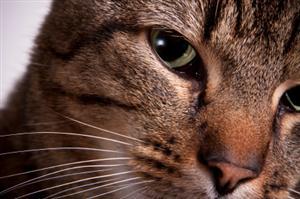
Can common pets still pick out a specific color in total darkness? A dog, a cat, and a monkey are trained for two weeks to choose a red ball from a set of colored balls. After training, each animal picks the red ball 10 times in a bright room.
Then the lights go off completely. Even in total darkness, all three animals select the red ball most of the time. The dog and monkey score nearly perfectly in the dark.
Hypothesis
The hypothesis is that dogs, cats and monkeys are all able to see color in the dark.
Method & Materials
You will train a dog, cat and monkey to select a red ball from amongst other colored balls. Then you will test each animal in a dark room to see if they can still select the red ball.
You will need a monkey, a dog, a cat, a box of pet snacks, a red, blue and yellow ball, a dark room with no windows or a room with windows and curtains, and an animal trainer.
Eureka Crate — engineering & invention kits for ages 12+ — monthly projects that build real-world skills. (Affiliate link)
See what’s includedResults
The results of the experiment showed that in the dark environment, the dog, cat and monkey were able to successfully select the red color ball most of the time. This proves that the hypothesis is correct.
Why do this project?
This science project is interesting because it explores the night vision of animals and how they are able to see in the dark.
Also Consider
Variations of this experiment could include testing other animals such as rats, hamsters or squirrels, or testing different breeds of dogs, cats and monkeys.
Full project details
Additional information and source material for this project are available below.Related videos
These videos explain the science behind this project and demonstrate key concepts used in the experiment.
Share this Science Project:
Browse by Grade
Related Science Fair Project Ideas
Time roosters and hens racing to a food tray with and without a log obstacle to see which group adapts faster.
Hard
Race male and female mice through a cardboard maze, then use a T-maze to discover each mouse's paw preference.
Hard
Build a cardboard maze, send hamsters and mice through it ten times each, and discover which species learns the route faster.
Hard
Share this Science Project: