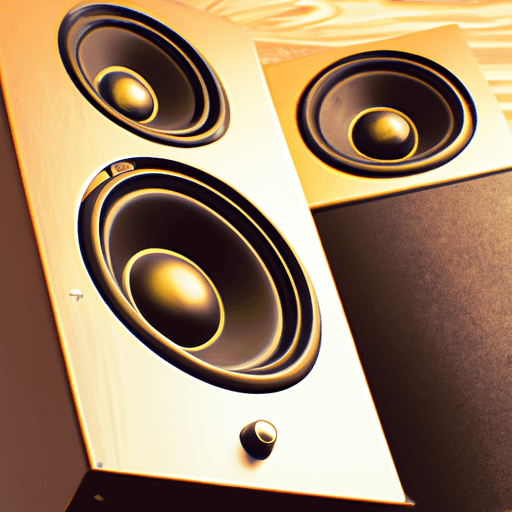
Does the size of a speaker box change which sounds come through louder? You build three sealed plywood enclosures of different depths and mount identical 8-inch speakers in each one. Then you play test tones at six frequencies and record the decibel level with a meter placed one meter away.
The larger enclosures produce a flatter response across all frequencies. The smallest enclosure boosts certain mid-range frequencies above the baseline, making some tones noticeably louder than others.
Hypothesis
The hypothesis is that reducing the size of the speaker enclosure will cause the dB of some frequencies to be higher compared to the rest of the frequencies.
Every sound frequency corresponds to a specific vibration speed, and an enclosure can amplify some frequencies more than others. When test tones at six frequencies are played through identical speakers mounted in different-sized boxes, the smallest enclosure boosts certain mid-range frequencies above the baseline. The larger enclosures produce a flatter response, meaning each frequency vibrates through the box without one speed of vibration dominating the rest.
The same speaker can produce different decibel readings depending on what surrounds it. You build three sealed plywood enclosures of different depths, mount identical 8-inch speakers in each, and play test tones at six frequencies. A meter placed one meter away records the level for each tone. The larger enclosures produce a flatter response across all frequencies. The smallest enclosure boosts certain mid-range frequencies above the baseline — making some tones noticeably louder than others even though the speaker itself never changes.
Every enclosed air space has a natural pitch set by its dimensions. When a sound frequency matches that pitch, the air inside vibrates strongly and grows louder. This experiment tests that effect across three sealed plywood enclosures of different depths, each fitted with an identical 8-inch speaker. Playing test tones at six frequencies and recording decibel levels one meter away, you find that the larger enclosures produce a flatter response across all frequencies. The smallest enclosure, by contrast, boosts certain mid-range frequencies above the baseline — making some tones noticeably louder than others.
Method & Materials
You will construct three speaker enclosures of different sizes using plywood, glue, and nails. You will then connect the speakers to a CD player and measure the decibel reading of various audio frequencies using a decibel meter.
You will need plywood, glue, nails, a drill, saw, decibel meter, CD player, and a test CD with various audio frequencies.
Eureka Crate — engineering & invention kits for ages 12+ — monthly projects that build real-world skills. (Affiliate link)
The results showed that the frequency response of the two larger speakers did not go beyond the 0 dB level, but the smallest speaker produced some frequencies that were louder than the others. This type of air tight speaker enclosure is called a sealed enclosure and can produce more precise sound.
Why do this project?
This science project is interesting because it shows how the size of a speaker enclosure can affect the sound it produces.
Also Consider
Experiment variations could include checking the frequency response using different types and thickness of wood for the enclosure, or using different sizes of speakers.
Full project details
Additional information and source material for this project are available below.