

Wet Monarchs in Cold Storage
Medium
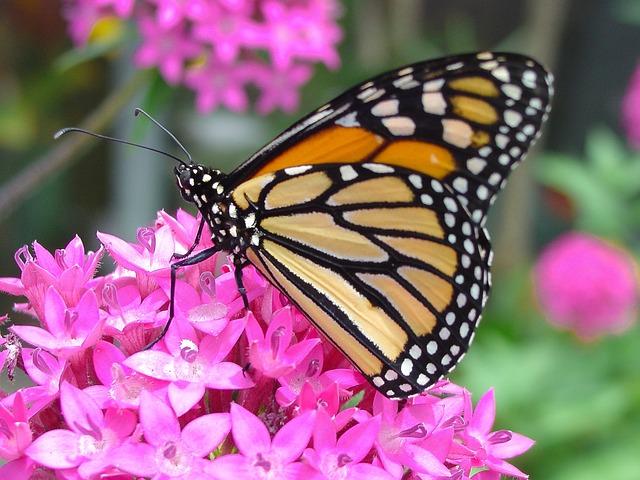
Can Monarch butterflies survive rain followed by freezing cold? You spray 40 Monarchs with water to mimic rain. Then you split them into four groups with different cold exposures.
One group dries at room temperature. The others go into cold storage for different lengths of time. You check on them over 3 days. The room-temperature group survives. About half survive 2 hours of cold. None survive a full day or more in cold storage after being wet.
Hypothesis
The hypothesis is that the Monarch butterfly will not be able to survive wet and freezing cold temperatures.
Method & Materials
You will set up four fish tanks, each with 10 Monarch butterflies. You will spray the butterflies with water and expose them to different conditions. You will observe the butterflies for three days to see if they survive or die.
You will need four transparent fish tanks, 40 Monarch butterflies, a spray bottle, one liter of tap water, and a cold storage room.
Tinker Crate — science & engineering build kits for ages 9–12 — real tools, real experiments, delivered monthly. (Affiliate link)
See what’s includedResults
The results of the experiment show that all the Monarch butterflies in tank A will survive, some of the butterflies in tank B (approximately 50%) will survive, and the butterflies in tanks C and D will not survive. This proves that the hypothesis is true - that Monarch butterflies will not be able to survive wet and freezing cold temperatures.
Why do this project?
This science project is interesting because it shows how global warming can have a drastic effect on the Monarch butterfly population.
Also Consider
Variations of this experiment could include repeating the experiment without wetting the butterflies' wings first, or finding out more precisely how many hours or days the Monarch butterflies with wet wings will be able to survive in freezing temperatures.
Full project details
Additional information and source material for this project are available below.Related videos
These videos explain the science behind this project and demonstrate key concepts used in the experiment.
Share this Science Project:
Browse by Grade
Featured In
Related Science Fair Project Ideas

Place four sealed jars with different ground surfaces in the sun and track which one heats the trapped air fastest.
Medium

Trap CO2 from baking soda and vinegar under a bottle with sprouting seeds and compare their growth to a control.
Medium

Trap a seedling with carbon dioxide inside a soda bottle, then see if it outgrows one in normal air.
Medium
Share this Science Project: