

Rock Porosity and Water Storage
Medium
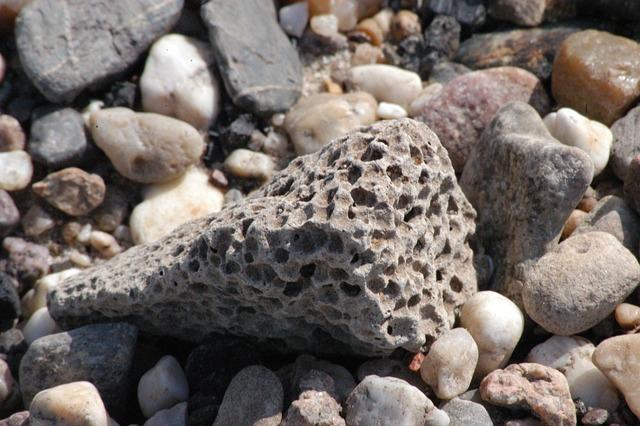
Can some rocks hold more water than others? Rocks have tiny holes and channels that trap liquids like water and oil. Some rocks soak up water like a sponge. Others let it pass right through.
You test different rock types by soaking them in water. Then you measure how much each one absorbs. You also check how easily water flows through each sample.
By the end you see which rocks store the most water. You also learn why certain rocks are better at holding oil and gas underground.
Hypothesis
The hypothesis is that different types of rocks have different porosities and permeability, affecting the amount of water they can hold.
Science Concepts Learned
Permeability
Permeability controls whether water flows through rock or gets trapped inside. Rocks with connected channels let water pass quickly. Others block flow and store water instead. In this project, you check how easily water flows through each sample to compare permeability across six rock types.
Rock Porosity
Rocks have tiny open spaces inside them that can hold water. Some rocks soak up water like a sponge, while others let it pass right through. You can test this by soaking different rock types in water and measuring how much each one absorbs.
Method & Materials
You will weigh, measure, and submerge six types of rocks in water. Then, you'll record their weights after 10 minutes and after 24 hours, and every day for three days.
You will need six types of rocks, a beaker for each rock sample, a graduated cylinder, an electronic balance, and water.
Eureka Crate — engineering & invention kits for ages 12+ — monthly projects that build real-world skills. (Affiliate link)
See what’s includedResults
Shale and sandstone absorbed the most water, which implies they have the best combination of porosity and permeability to hold the water. Porosity is the measure of the tiny air spaces within a rock, while permeability is the ability of a rock to allow fluids to flow through it. Porosity refers to the rock's ability to hold a fluid, whereas permeability is the rock's ability to resist or allow the flow of a fluid through it. Thus, out of the rocks tested, shale and sandstone have the best potential to hold water, oil and gas.
Why do this project?
This science project is unique because it provides hands-on experience with rock formations' properties and potential to hold water, oil and gas.
Also Consider
Experiment variations include testing different types of rocks or changing the duration of submerging rocks in water. Additionally, the experiment can be repeated using oil to understand how well these rocks can hold oil.
Full project details
Additional information and source material for this project are available below.Related videos
These videos explain the science behind this project and demonstrate key concepts used in the experiment.
Get ready for a mouth-watering demonstration of the impact of porosity and permeability on rocks - with chocolate and milk! By observing how easily bubbles can be blown through milk via porous and less porous chocolate, you can gain a better understanding of the importance of permeability in the movement of water and fluids through rocks. It's a creative and delicious way to learn about this important geological concept!
Discover the fascinating way in which the crevices and spaces within rocks can enhance their porosity, ultimately creating the perfect environment for water, oil, and gas to accumulate!
Share this Science Project:
Browse by Grade
Related Science Fair Project Ideas
Transform crayons into three types of model rocks and see how the real rock cycle works.
Medium
Reshape Starburst candies with heat and pressure to model how the Earth forms three types of rock.
Medium
Use chocolate shavings and heat to build three types of model rock that match real geology.
Medium
Share this Science Project: