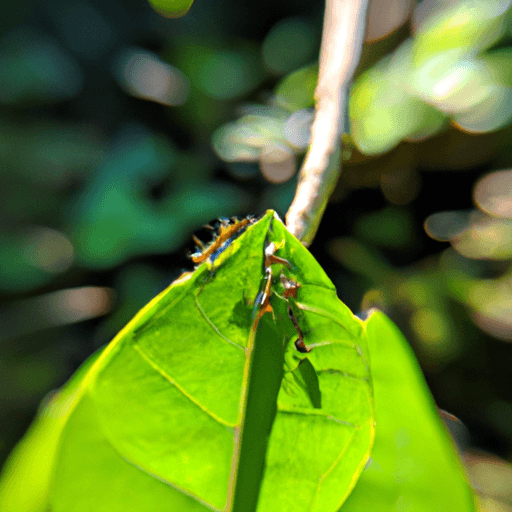
Some stinging insects spray formic acid when threatened — can you detect it? You make your own indicator paper from red cabbage juice and test it near disturbed ants.
You boil red cabbage leaves in water for fifteen minutes. Then you soak paper towel strips in the purple liquid and let them dry. These strips change color when they touch an acid or a base.
Place a dry strip over a disturbed anthill. If it turns pink, the ants are spraying acid. You can also test other liquids around the house.
Hypothesis
The hypothesis is that some stinging insects spray formic acid into the air when threatened.
Some stinging insects spray formic acid when threatened — and cabbage juice can catch them in the act. You boil red cabbage leaves in water, soak paper towel strips in the purple liquid, and let them dry. When the strips touch an acid, the pigment reacts and the paper turns pink. Place a dry strip over a disturbed anthill, and a color change tells you the ants are spraying acid.
Red cabbage juice changes color when it touches an acid or a base. When you soak paper strips in this juice and let them dry, the strips turn pink near acid. You boil red cabbage leaves in water, soak paper towel strips in the purple liquid, and let them dry. Place a dry strip over a disturbed anthill — if it turns pink, the ants are spraying formic acid.
Red cabbage juice is a natural indicator that changes color when it touches an acid or a base. You boil cabbage leaves to extract the purple liquid, then soak paper towel strips in it and let them dry. When you hold a strip near a disturbed anthill, the strip turns pink — showing that the ants are spraying formic acid into the air.
Anthocyanins turn pink when they meet an acid. Over a lightly disturbed anthill, indicator paper shifts to pink. That color change reveals the ants release formic acid when threatened.
Method & Materials
You will place a piece of indicator paper over the ants after lightly disturbing an anthill without getting stung.
You will need red cabbage, a hot plate, a pot and bowl, a strainer, newspaper, scissors, paper towel, and water.
Tinker Crate — science & engineering build kits for ages 9–12 — real tools, real experiments, delivered monthly. (Affiliate link)
Through this experiment, we can observe that some stinging insects spray formic acid into the air when threatened. This is an interesting and unique way for ants to protect themselves.
Why do this project?
This science project is interesting and unique because it allows us to observe the behavior of ants when they are threatened.
Also Consider
Experiment variations to consider include testing different liquids or solutions with the indicator paper, and finding out how many different colors can be found.
Full project details
Additional information and source material for this project are available below.