Can sound alone shatter a glass? Every goblet vibrates at a natural frequency (its own built-in pitch). When an outside sound matches that pitch closely enough, the vibrations grow until the glass breaks.
You find the goblet's resonant frequency by tapping it and recording the pitch. A microphone and oscilloscope measure the exact frequency. Then you place the goblet near a loudspeaker and slowly tune the tone to match.
The goblet in this test vibrated at about 800 cycles per second. When the speaker matched within 0.5 Hz, the glass shattered.
Hypothesis
The hypothesis is that the resonant frequency of a glass goblet can be determined by using a microphone and oscilloscope.
Every object has a natural frequency — the number of times it vibrates per second on its own. When an outside sound matches that frequency closely enough, the vibrations grow. A goblet in this test vibrated at about 800 cycles per second. When the speaker matched within 0.5 Hz, the glass shattered.
Every goblet has a natural frequency — its own built-in pitch. Tap one and record the sound with a microphone and oscilloscope to measure that exact frequency. Then place the goblet near a loudspeaker and slowly tune the tone to match. When an outside sound gets close enough to the goblet's natural frequency, the vibrations grow stronger and stronger. In one test, a goblet vibrated at about 800 cycles per second. When the speaker matched within 0.5 Hz, the glass shattered — showing how precisely this effect depends on frequency alignment.
Method & Materials
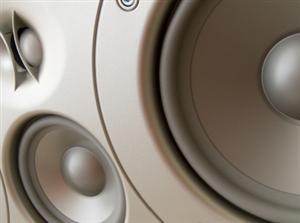
You will place the goblet near a high quality loudspeaker that is playing a note that very nearly matches the goblet's resonant frequency. The volume on the audio amplifier will be turned up rather high.
You will need a microphone, oscilloscope, high quality loudspeaker, and audio amplifier.
MEL Physics — hands-on physics experiment kits delivered monthly — real experiments, not just reading. (Affiliate link)
The experiment showed that a "rigid" piece of glass can undergo vibration 800 times a second for several seconds before shattering. This demonstrates the power of sound and its ability to cause objects to vibrate at their resonant frequency.
Why do this project?
This science project is interesting and unique because it demonstrates the power of sound and its ability to cause objects to vibrate at their resonant frequency.
Also Consider
Experiment variations to consider include using different types of glasses and different frequencies of sound.
Full project details
Additional information and source material for this project are available below.