Who can blow the most air into a balloon with just one breath? Lung capacity (the total air your lungs can hold) varies from person to person.
You give identical balloons to several people. Each person blows up their balloon with a single breath. Then you wrap a tape measure around the balloon and record the size. Repeat two more times and average the three numbers.
Compare results to see if body size or fitness level seems to matter. You can also run in place for a few minutes and try again to see if exercise changes the outcome.
Hypothesis
The hypothesis is that people have different lung capacities.
Lung capacity — the total air your lungs can hold — varies from person to person, and a balloon makes the difference visible. You give identical balloons to several people and have each one blow up their balloon with a single breath. Wrap a tape measure around it, record the size, and repeat two more times to get an average. Comparing results across people shows whether body size or fitness level affects how much air the lungs hold.
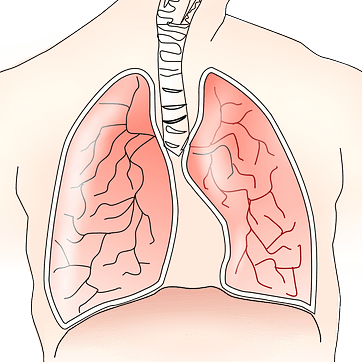
Your respiratory system brings air in and pushes it back out with each breath. Lung capacity (the total air your lungs can hold) varies from person to person. You can measure it by blowing up a balloon with a single breath and comparing sizes across different people.
Method & Materials
You will give identical balloons to pairs of students and have them blow up the balloons as much as possible with one breath.
You will need 6" and 9" balloons, a cloth tape measure, paper, and a pen or pencil.
Tinker Crate — science & engineering build kits for ages 9–12 — real tools, real experiments, delivered monthly. (Affiliate link)
The results of this experiment show that people do have different lung capacities.
Why do this project?
This science project is interesting because it allows students to explore the differences in lung capacity between people from different backgrounds.
Also Consider
Experiment variations to consider include having students run in place for 2-3 minutes before blowing up the balloons and having students blow up the balloons with multiple breaths.
Full project details
Additional information and source material for this project are available below.