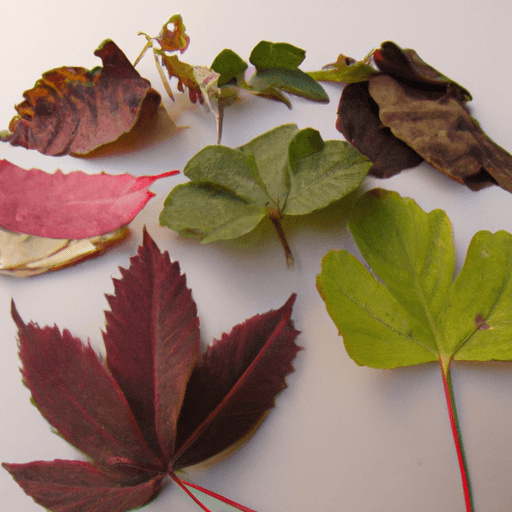
Why do green leaves turn red and yellow in autumn? Green chlorophyll (the pigment that powers photosynthesis) hides other colors all summer long. When chlorophyll breaks down in fall, those hidden pigments show through.
You can separate these colors yourself using chromatography (a method that splits mixtures by how fast they travel). Tear leaves into small pieces and soak them in rubbing alcohol. Then dip a strip of coffee filter paper into the colored liquid. As the alcohol travels up the paper, it carries each pigment a different distance. You may see bands of green and yellow. Some leaves also reveal orange or red.
Hypothesis
The hypothesis is that the leaves will lose their green color due to lack of materials needed to survive in the winter and fall.
Green chlorophyll powers photosynthesis, but it also hides other colors in a leaf all summer long. When chlorophyll breaks down in fall, those hidden pigments finally show through — the reds and yellows of autumn.
Chlorophyll is the green pigment that captures sunlight to make food for plants — and all summer long, it hides other colors in leaves. You can separate these pigments yourself using chromatography, a method that splits mixtures by how fast they travel. Tear leaves into small pieces, soak them in rubbing alcohol, then dip a strip of coffee filter paper into the colored liquid. As the alcohol travels up the paper, it carries each pigment a different distance, revealing bands of green, yellow, and sometimes orange or red.
As alcohol travels up a coffee filter strip, it carries each leaf pigment a different distance — some move fast, others barely budge. The result is distinct bands of green, yellow, orange, or red spread across the paper, each pigment landing where its speed ran out. What looked like one mixed color turns out to be several hidden ones, now separated and visible.
Method & Materials
You will separate the colors of a green leaf using chromatography.
You will need leaves, small jars, covers for jars or aluminum foil or plastic wrap, rubbing alcohol, paper coffee filters, shallow pan, hot tap water, tape, pen, plastic knife or spoon, and a clock or timer.
Tinker Crate — science & engineering build kits for ages 9–12 — real tools, real experiments, delivered monthly. (Affiliate link)
The experiment showed that the leaves lost their green color due to lack of materials needed to survive in the winter and fall. The colors of the leaves were separated using chromatography, revealing yellow, orange, and red colors that were hidden beneath the green chlorophyll.
Why do this project?
This science project is interesting and unique because it uses chromatography to uncover the hidden colors of a green leaf and explain why leaves change color in the fall.
Also Consider
Experiment variations to consider include using different types of leaves or using different solvents to separate the colors.
Full project details
Additional information and source material for this project are available below.