

Star Twinkling and Atmospheric Conditions
Easy
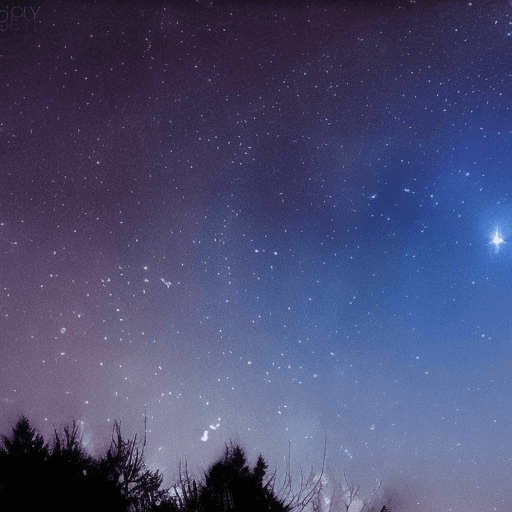
Do stars blink faster on a windy night or a calm one? Twinkling happens because moving air bends starlight on its way to your eyes. The more turbulent the atmosphere, the more a star flickers.
You count how many times a bright star blinks in ten seconds under different conditions. Compare stars high in the sky to stars near the horizon. Test on windy nights versus still nights. If possible, compare readings at sea level to those at higher altitude.
Also check whether stars change color as they twinkle. Astronomers call steady conditions good "seeing." When twinkling is low, telescopes collect sharper data about star brightness and color.
Hypothesis
The hypothesis is that the atmosphere between the star and the observer's eye causes starlight to twinkle.
Science Concepts Learned
Atmospheric Refraction
Light from a star travels in a straight line through space. When it enters Earth's atmosphere, layers of air at different temperatures bend that light, shifting the star's apparent position slightly. Turbulent air bends the light in constantly changing directions — so the star seems to flicker. The more turbulent the atmosphere, the more a star twinkles.
Method & Materials
You will count star blink rates higher in the sky compared to stars lower in the sky, on a windy night compared to a still night, and at sea level compared to on a mountain top. You will also record the color of the star when it twinkles each time.
You will need a clear night, a telescope or binoculars, a notebook, and a pen or pencil.
MEL Physics — hands-on physics experiment kits delivered monthly — real experiments, not just reading. (Affiliate link)
See what’s includedResults
Through this project, you'll learn that the atmosphere between the star and the observer's eye causes starlight to twinkle. You'll also observe that the steadiness of images, or "seeing," is best when the twinkling is least.
Why do this project?
This science project is unique because it allows you to explore the atmosphere and how it affects starlight. You'll also learn how astronomers use twinkling to collect data about stars and galaxies.
Also Consider
Experiment variations to consider include counting star blink rates on a cloudy night compared to a clear night, and at different times of the day.
Full project details
Additional information and source material for this project are available below.Related video
These videos explain the science behind this project and demonstrate key concepts used in the experiment.
Share this Science Project:
Related Science Fair Project Ideas
Build a scale model of the Sun and Earth and count how many Earths fit across its width.
Easy
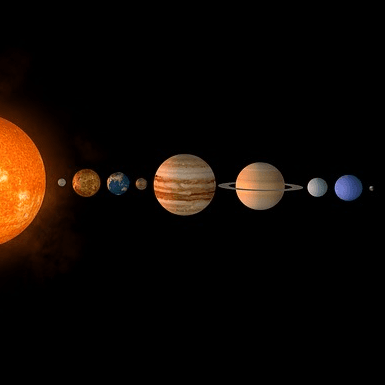
Shape Play-Doh into scale-sized planets and discover how tiny Earth looks next to Jupiter.
Easy
Turn a balloon into the Sun and shape play dough planets to build a tabletop solar system model.
Easy
Share this Science Project: