What kind of light exists just beyond the red end of a rainbow? In 1800, William Herschel split sunlight with a prism and measured the temperature of each color. He found that the hottest spot was past the visible red, in a region with no visible light at all. He called it infrared.
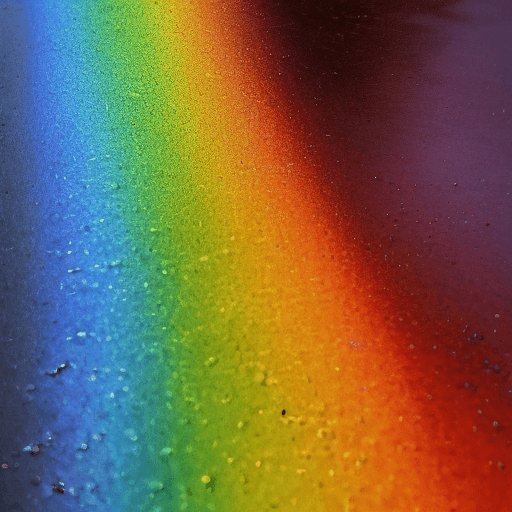
You can repeat this experiment. Place a glass prism on a sunny windowsill and project a spectrum onto white paper inside a box. Blacken the bulbs of three alcohol thermometers with flat black paint. Place one bulb in the blue band and another in the red. Set the third just past the red where no color is visible.
The temperature rises from blue to red. The thermometer past the red reads even higher. This confirms that invisible infrared radiation carries more heat than visible light.
Hypothesis
The hypothesis is that infrared light will have a higher temperature than visible light.
A prism splits sunlight into its component wavelengths, spreading each color from blue to red across white paper. You blacken the bulbs of three alcohol thermometers with flat black paint and place one in the blue band, one in the red, and one just past the red where no visible color falls. The temperature rises from blue to red. The thermometer past the red reads even higher — confirming that invisible infrared radiation carries more heat than any visible color.
The full range of light and energy stretches beyond what our eyes can see. Splitting sunlight with a prism and placing thermometers in each color band shows that temperature rises from blue to red. The thermometer set just past the red, where no color is visible, reads even higher. This proves that invisible infrared radiation carries more heat than visible light.
Heat energy travels as invisible light beyond the red end of the visible spectrum. When you split sunlight with a prism and place blackened alcohol thermometers in each color band, the temperature rises steadily from blue to red. The thermometer set just past the red — where no color is visible at all — reads even higher than any visible color. That invisible region, which William Herschel identified in 1800, carries more heat than visible light does.
Method & Materials
You will need to blacken the bulbs of the thermometers, place a white piece of paper at the bottom of a cardboard box, rotate the prism until a good wide spectrum appears on the white paper, and place the thermometers in the spectrum.
You will need an equilateral glass prism, 3 alcohol thermometers, scotch tape, a white piece of paper, and a south facing window sill or a box.
MEL Physics — hands-on physics experiment kits delivered monthly — real experiments, not just reading. (Affiliate link)
This experiment showed that the dark area had a much higher temperature than the areas which were in regions of light. This discovery was important because it led to the realization that there are many other types of light that we cannot see and the visible colors are only a very small part of the entire range of light which we call the electromagnetic spectrum.
Why do this project?
This science project is interesting and unique because it allows students to explore the invisible light called infrared and measure its temperature.
Also Consider
Experiment variations to consider include changing the width of the spectrum, which depends on time of day, and the distance from the prism, which is proportional to the height of the box.
Full project details
Additional information and source material for this project are available below.