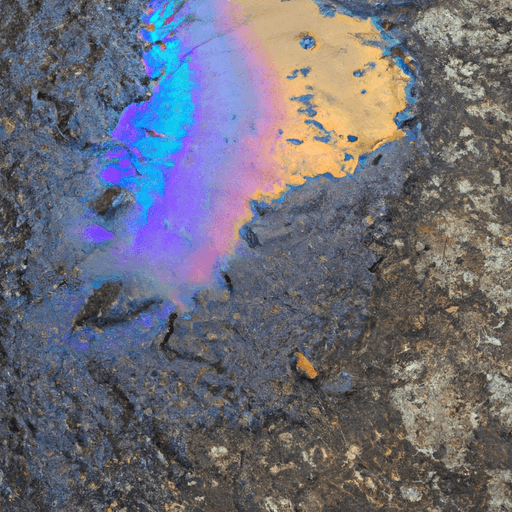
Can bacteria break down oil the way cleanup crews treat ocean spills? A marine bacterium called Acinetobacter calcoaceticus RAG-1 uses hydrocarbons in oil as a carbon source.
You set up two test tubes with carbon-deficient growth media. You add RAG-1 bacteria to both tubes. One gets used motor oil. The other gets fresh motor oil. The tubes go into a shaker water bath.
Every 24 hours you measure cloudiness with a spectrophotometer. As the bacteria multiply and consume the oil, the media grows cloudier. You graph the relationship between bacterial growth and oil breakdown.
Hypothesis
The hypothesis is that Acinetobacter calcoaceticus RAG-1 can be used to bioremediate oil spills.
A marine bacterium called Acinetobacter calcoaceticus RAG-1 uses hydrocarbons in oil as a carbon source — meaning it literally feeds on the pollution as it grows. This project shows that mechanism in action on a petroleum pollutant. You set up two test tubes with carbon-deficient growth media, inoculate both with RAG-1, then layer one with used motor oil and the other with fresh. As the bacteria multiply and consume the oil, the media grows cloudier. You track that cleanup every 24 hours with a spectrophotometer, graphing the relationship between bacterial growth and oil breakdown.
When bacteria find a usable food source, they multiply and spread to consume it. In this project, that food source is motor oil. Acinetobacter calcoaceticus RAG-1 goes into two test tubes of carbon-deficient growth media, one with used motor oil and one with fresh. The oil supplies the carbon the bacteria need to grow. As they multiply and consume the oil, the media grows cloudier. A spectrophotometer measures optical density every 24 hours, tracking that growth against oil breakdown.
Spectrophotometry measures how much light a liquid absorbs, revealing what is dissolved or suspended in it. In this experiment, you track the optical density of carbon-deficient growth media as Acinetobacter calcoaceticus RAG-1 bacteria multiply and consume oil. As the bacteria grow, the media grows cloudier and absorbs more light. That means each 24-hour reading directly quantifies bacterial growth linked to oil breakdown.
Method & Materials
You will use a spectrophotometer to measure the optical density of the media, inoculate two test tubes with RAG-1, layer 60 ul of used and fresh oil on each tube, and place the tubes in a shaker water bath.
You will need a spectrophotometer, two sterile 10 ml test tubes containing 3 ml carbon deficient media, 2 snap covers for tubes - size 13, 1 agar plate of RAG-1, 60 ul used motor oil, 60 ul fresh motor oil, overnight growth of Acinetobacter calcoaceticus RAG-1, test tube rack, flame source, goggles, 10-100 ul micropipette, and carbon minimal salts culture media.
Eureka Crate — engineering & invention kits for ages 12+ — monthly projects that build real-world skills. (Affiliate link)
This experiment demonstrates how Acinetobacter calcoaceticus RAG-1 can be used to bioremediate oil spills. The correlation between the optical density of the media, the growth rate of the bacteria, and the amount of oil degraded was observed.
Why do this project?
This science project is unique because it uses a test tube model to experiment with bioremediation of oil spills.
Also Consider
Experiment variations to consider include enhancing the growth media with nutrients to increase bacterial activity, isolating the RAG-1 plasmid and transforming hardier strains of bacteria, developing a method which allows the quick delivery of ready-to-grow bacterial cultures to an oil spill site, and using another organism such as algae as a model for bioremediation.
Full project details
Additional information and source material for this project are available below.