Search for Science Fair Projects

1000 Science Fair Projects with Complete Instructions

General Chemistry Science Fair Project

Salt, Bluing, and Ammonia Crystal Garden
Easy
Salt, Bluing, and Ammonia Crystal Garden | Science Fair Projects | STEM Projects
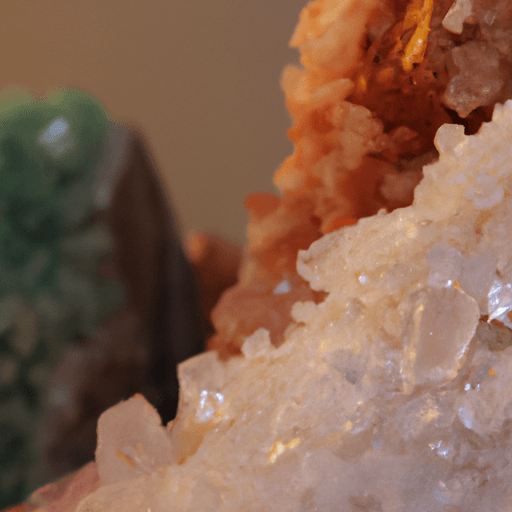
Can you grow crystals on a kitchen sponge overnight? Crystals form when atoms or molecules join together in a repeating pattern. Given the right ingredients, that pattern builds itself. You arrange clean sponges in a pie plate. Then you mix table salt and water with laundry bluing and household ammonia. Pour the mixture over the sponges and add a few drops of food coloring. Over the next few hours or days, feathery crystals sprout across the sponges. The salt provides the building material. The bluing supplies tiny particles for crystals to grow on. The ammonia speeds evaporation so the crystals form faster.

Hypothesis

The hypothesis is that crystals can be grown with a few simple ingredients and a little patience.

Science Concepts Learned

Crystal Growth

Crystals form when atoms or molecules join together in a repeating pattern, and they build faster when they have a surface to start on. Here, laundry bluing supplies the tiny particles that give crystals something to grow on, while table salt provides the building material. Add ammonia to speed evaporation, and within hours feathery crystals sprout across the sponges as dissolved particles lock into that repeating structure.

Evaporation

When the liquid in the mixture turns to gas and moves into the air, the salt dissolved in it has nowhere to go. It joins together in a repeating pattern and forms feathery crystals across the sponges. The ammonia speeds this process so the crystals form faster. The bluing supplies tiny particles for the crystals to grow on, and the table salt provides the building material.

Method & Materials

You will arrange sponges in a pie plate, mix salt, water, bluing, and ammonia in a bowl, pour the mixture over the sponges, and sprinkle food colouring randomly on the sponges.
You will need 3 clean, dry sponges, an aluminum pie plate or cake pan, a glass measuring cup, 1/4 cup table salt, 1/4 cup water, 1/4 cup laundry bluing, 2 tablespoons household ammonia, a mixing bowl, a metal spoon, and blue and green food colouring.

Tinker Cratescience & engineering build kits for ages 9–12 — real tools, real experiments, delivered monthly. (Affiliate link)

See whats included

Results

Crystals form when atoms or molecules join together in a repeating pattern. This project shows how crystals can be grown by adding atoms or molecules to all its sides in the same pattern. The results may take hours or even days to see.

Why do this project?

This science project is interesting and unique because it shows how crystals can be grown with a few simple ingredients and a little patience.

Also Consider

Experiment variations to consider include using different types of sponges, different types of food colouring, and different amounts of the ingredients.

Full project details

Additional information and source material for this project are available below.

Related video

These videos explain the science behind this project and demonstrate key concepts used in the experiment.
Share this Science Project:

Related Science Fair Project Ideas

Baking Soda and Vinegar Lava Lamp
Drop baking soda and vinegar into a bottle of oil and water and watch colored blobs rise and sink like a real lava lamp.
Easy
Glow-in-the-Dark Lava Lamp
Charge glow-in-the-dark paint and drop a fizzy tablet into oil to create a lava lamp that glows without a black light.
Easy
Glitter Lava Lamp with Antacid Tablets
Drop an antacid tablet into a bottle of oil, water, and glitter to create a sparkling lava lamp that keeps cycling.
Easy
Share this Science Project: