Can a tiny freshwater animal reveal how harmful car exhaust really is? Hydra are small organisms that live in ponds and respond quickly to changes in water quality. This project uses them as living pollution detectors.
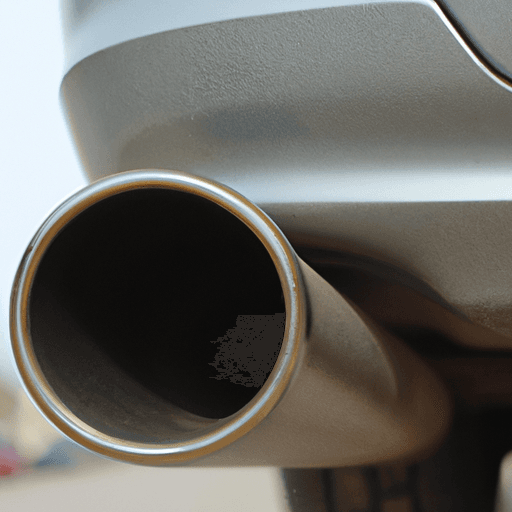
You place groups of hydra in two sealed environmental chambers. One chamber receives automobile exhaust stored in a tire inner tube. The other holds normal room air as a control. Every 24 hours you examine both groups under a stereo microscope.
You record changes in body shape, feeding behavior, and survival. Over several days you compare the exhaust-exposed hydra to the control group. The differences reveal whether car exhaust can harm freshwater life even in small doses.
Hypothesis
The hypothesis is that automobile exhaust will have a negative effect on the Hydra.
Car exhaust contains gases and particles that can reach freshwater habitats far from the road. Hydra — small organisms that live in ponds and respond quickly to changes in water quality — make useful living pollution detectors. You place groups of hydra in two sealed environmental chambers: one receives automobile exhaust delivered through a tire inner tube, the other holds normal room air as a control. Every 24 hours you examine both groups under a stereo microscope and record changes in body shape, feeding behavior, and survival. Over several days the differences between the exhaust-exposed group and the control reveal whether small doses of car exhaust can harm freshwater life.
Hydra live in ponds and respond quickly to changes in water quality, which makes them useful living pollution detectors. In this project, groups of hydra are placed in two sealed chambers — one receiving automobile exhaust stored in a tire inner tube, the other holding normal room air as a control. Every 24 hours you examine both groups under a stereo microscope, recording changes in body shape, feeding behavior, and survival. The differences that accumulate over several days reveal whether car exhaust can harm freshwater life even in small doses.
Some creatures respond so quickly to harmful chemicals that they serve as living pollution detectors. Hydra are one such organism: sensitive, easy to observe, and useful for tracking how poisons affect biological systems. This project places hydra in sealed chambers with automobile exhaust, then monitors changes in body shape, feeding behavior, and survival over several days.
Method & Materials
You will be filling four petri dishes with pond water and placing five Hydra in each dish. You will then place two petri dishes in each of the two environmental chambers. One chamber will be connected to the source of pollution (the automobile exhaust) and the other will be the control chamber containing room atmosphere. After each of four 24 hour periods, you will examine both groups of Hydra using a binocular microscope and compare any morphological changes that may have occurred.
You will need 100 brown Hydra, fresh pond water, 2 environmental chambers, mixed crustaceans including daphnia and artemia (for feeding), auto exhaust, large tire inner tube with delivery tube to the environmental chamber, 10 petri dishes, 6 eye droppers or clean micropipettes, hand lens, one binocular stereo microscope with zoom lens, clock, one microprojector and prepared slides (plain hydra, hydra with spermaries, with ovary, budding and feeding).
Eureka Crate — engineering & invention kits for ages 12+ — monthly projects that build real-world skills. (Affiliate link)
After observing the Hydra in both chambers, it was found that the Hydra in the chamber exposed to automobile exhaust had morphological and behavioral changes compared to the Hydra in the control chamber. The most notable change was that the Hydra in the chamber exposed to automobile exhaust had a decreased appetite and were less active.
Why do this project?
This science project is interesting and unique because it is a great way to observe the effects of automobile exhaust on a living organism.
Also Consider
Experiment variations to consider include reducing the trial periods to 12 hours over a four day period and observing the effects of different types of automobile exhaust on the Hydra.
Full project details
Additional information and source material for this project are available below.