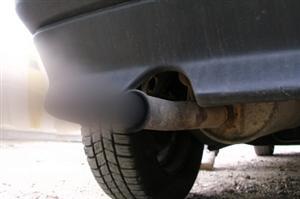
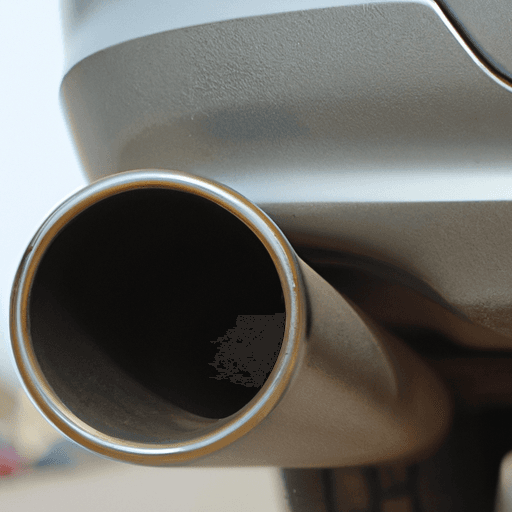
How much more carbon monoxide does an old car release compared to a new one? You measure exhaust emissions from four cars of the same make and model. Their ages are new, 5 years, 10 years, and 20 years.
Each car runs for 20 minutes while a carbon monoxide detector sits 20 centimeters from the exhaust pipe. You test each car twice: once in a closed garage and once in open air.
The 20-year-old car produced the highest readings. The new car produced the lowest. Levels were higher in the closed garage for every car.
Hypothesis
The hypothesis is that the new car will emit the smallest amount of carbon monoxide, while the 20-year-old car will have the highest emissions.
Carbon monoxide is one of the gases that comes out of a car's exhaust pipe. Older vehicles tend to release more of this harmful gas than newer ones. A 20-year-old car produced the highest carbon monoxide readings, while a new car of the same make and model produced the lowest.
Carbon monoxide is a colorless, odorless gas that forms whenever fuel burns incompletely — including inside a car engine. To see how much engine age matters, you measure exhaust emissions from four cars of the same make and model: new, 5 years, 10 years, and 20 years old. Each car runs for 20 minutes with a carbon monoxide detector placed 20 centimeters from the exhaust pipe. You test each car twice, once in a closed garage and once in open air. The 20-year-old car produced the highest readings; the new car produced the lowest. Levels were higher in the closed garage for every car — a clear demonstration of how quickly this invisible gas accumulates when ventilation is cut off.
Method & Materials
You will park the cars in a closed garage and an open space, start the car engine and leave it running for 20 minutes, and take the reading of the carbon monoxide level from the detector.
You will need a new car, a 5-year-old car, a 10-year-old car, a 20-year-old car, a carbon monoxide detector, an industrial fan, and 2 safety masks.
Eureka Crate — engineering & invention kits for ages 12+ — monthly projects that build real-world skills. (Affiliate link)
The results showed that the 20-year-old car had the highest carbon monoxide emission levels while the new car produced the least carbon monoxide. The carbon monoxide levels were higher in the closed garage and lower in the open space.
Why do this project?
This science project is interesting because it shows how the age of a car can affect the amount of carbon monoxide it emits. It also shows how the environment can affect the levels of carbon monoxide.
Also Consider
Variations of this experiment could include testing the release of other gasses like hydrocarbons, nitrogen oxides or carbon dioxide. You could also try to determine if there is a clear correlation between the size of the car's engine and the level of emission of carbon monoxide.
Full project details
Additional information and source material for this project are available below.