

Water Acidity and Guppy Survival
Medium
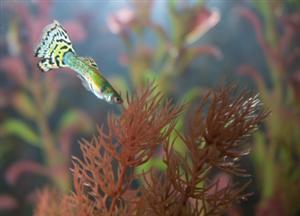
How acidic does water need to get before freshwater guppies cannot survive? You set up five small tanks with one liter of water each. Using vinegar, you adjust each tank to a different pH level: 6.5, 6.0, 5.5, 5.0, and 4.5.
You place ten guppies in each tank. Every two hours for ten hours, you count how many are still alive. Litmus strips confirm the pH stays consistent throughout the test.
Guppies in the most acidic water die fastest. Those in the least acidic tank survive the longest.
Hypothesis
The hypothesis is that the mortality rate of fresh water guppies (Poecilia reticulata) increases as the acid level in the water increases.
Method & Materials
You will need to wash and clean five fish tanks, fill each tank with one liter of water, measure the acidity of the water in each tank, add guppies to each tank, and measure how many guppies are still alive after 10 hours.
You will need 50 freshwater guppies, 5 fish tanks, 6 liters of water, 1 small bottle of vinegar, 1 syringe, 1 small fishing net, litmus paper, 1 wooden spatula, and 1 clock.
Eureka Crate — engineering & invention kits for ages 12+ — monthly projects that build real-world skills. (Affiliate link)
See what’s includedResults
The experiment showed that the guppies in the more acidic water died faster, and the guppies in the least acidic water lived longer. This proves that acid is toxic to the guppies, and as the level of acidity of the water increases, the guppies are poisoned and die.
Why do this project?
This science project is interesting because it shows how acid rain can have a serious impact on the survival of aquatic plants and animals. It also shows how different species may have different levels of tolerance for acidic water.
Also Consider
Variations of this experiment could include using aquatic plants instead of fish, using different species of freshwater fish, or replacing vinegar with soap detergent.
Full project details
Additional information and source material for this project are available below.Share this Science Project:
Related Science Fair Project Ideas
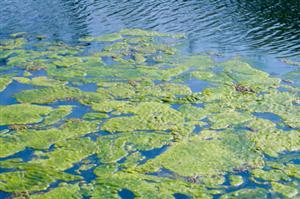
Add denitrifying bacteria to pond water and track whether nitrate levels drop faster than in untreated samples over three weeks.
Medium
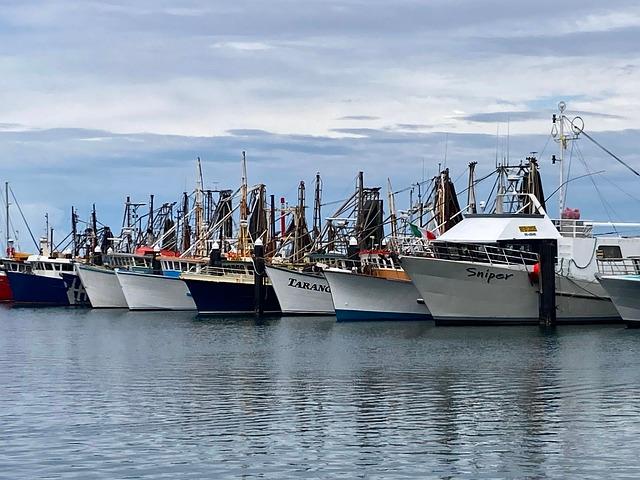
Collect water from a boatyard, marina, beach, and tap, then send all four to a lab to compare heavy metal levels.
Medium
Cover one beaker with a thin oil layer and leave another clear, then measure how much oxygen each underwater plant produces over five hours.
Medium
Share this Science Project: