

Oil Spills and Aquatic Plant Oxygen Production
Medium
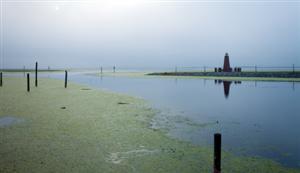
What happens to an underwater plant when oil covers the water surface above it? You place two hydrilla plants in separate beakers of water. You pour a thin layer of engine oil on one beaker and leave the other untouched.
Using inverted funnels and water-filled test tubes, you capture the oxygen each plant produces. You measure the collected gas every hour for five hours. The oil-covered plant stops producing oxygen after three hours, while the clean-water plant keeps going.
Hypothesis
The hypothesis is that the plant living in the beaker with a layer of oil on the surface will not be able to perform photosynthesis, and will hence stop producing oxygen.
Method & Materials
You will need two hydrilla plants, two beakers, two test tubes, two funnels, one liter of water, one ruler, and 10ml of engine oil. You will place the hydrilla plants in the beakers, pour 10ml of engine oil into one of the beakers, and observe the amount of oxygen produced by the hydrilla plants.
You will need two hydrilla plants, two beakers, two test tubes, two funnels, one liter of water, one ruler, and 10ml of engine oil.
Tinker Crate — science & engineering build kits for ages 9–12 — real tools, real experiments, delivered monthly. (Affiliate link)
See what’s includedResults
The results showed that the hydrilla plant in the beaker with a layer of oil stopped producing oxygen after 3 hours, while the plant in the beaker without the oil continued to produce oxygen even after 5 hours. This proves that the hypothesis is true.
Why do this project?
This science project is interesting because it shows how oil spills can have a devastating effect on aquatic plants. It also shows how oil spills can contaminate the food chain and affect humans.
Also Consider
Variations of this science project include limiting the light that enters the sides of the beaker by covering the sides with a cardboard, and testing for the growth of the plants by measuring the weight of the plants before adding the oil and 3 days after adding the oil.
Full project details
Additional information and source material for this project are available below.Related videos
These videos explain the science behind this project and demonstrate key concepts used in the experiment.
Share this Science Project:
Related Science Fair Project Ideas
Place guppies in five tanks at different acid levels and track survival every two hours to find the tipping point.
Medium
Add denitrifying bacteria to pond water and track whether nitrate levels drop faster than in untreated samples over three weeks.
Medium
Collect water from a boatyard, marina, beach, and tap, then send all four to a lab to compare heavy metal levels.
Medium
Share this Science Project: