Solar Reflectors and Cell Power Output
Hypothesis
Science Concepts Learned
How much sunlight reaches the cell's surface determines how much power it produces. A parabolic dish lined with aluminum foil and a flat mirror each concentrate sunlight onto a solar panel in different ways, boosting the light available for conversion. When you measure the voltage and current with each reflector, the parabolic reflector produces the highest power output, followed by the flat mirror.
When light strikes a solar cell, it creates electrical power — and concentrating more sunlight onto the cell increases that conversion. You set up the cell outdoors, then measure its voltage and current with no reflector, with a flat mirror, and finally with an aluminum-covered parabolic dish. The parabolic reflector produces the highest power output, followed by the flat mirror.
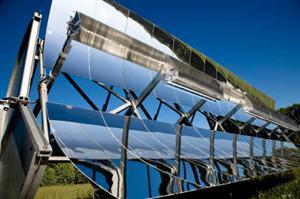
Reflectors help capture more sunlight by redirecting rays that would otherwise miss the cell. A parabolic dish lined with aluminum foil and a flat mirror each concentrate sunlight onto a solar panel in different ways. Using parabolic mirrors helps achieve the highest level of photovoltaic output from solar cells.
When you angle a flat mirror or a parabolic dish toward a solar cell, reflected sunlight hits the panel in addition to direct sunlight, increasing the light the cell absorbs. The parabolic dish, covered with aluminum foil, reflects and concentrates more of those rays onto the absorbing surface than a flat mirror can. That difference in concentration is why the parabolic reflector produces the highest power output, followed by the flat mirror.
Both a flat mirror and a parabolic dish redirect sunlight onto a solar cell, but the parabolic shape aims all its reflected light at a single spot on the panel. A flat mirror bounces light toward the cell without that tight focus. As a result, the parabolic reflector produces the highest power output, followed by the flat mirror.
A flat mirror bounces sunlight toward a solar cell but cannot focus it tightly. A parabolic dish covered with aluminum foil aims all its reflected rays at a single spot on the panel, concentrating more energy onto the surface. That tighter focus is why the parabolic reflector produces the highest power output, followed by the flat mirror.
Concentrating more sunlight onto a solar cell raises both the push and flow of electricity it produces. You measure the voltage and current with no reflector, then with a flat mirror, then with an aluminum-covered parabolic dish. The parabolic reflector produces the highest power output, followed by the flat mirror.
Method & Materials
MEL Physics — hands-on physics experiment kits delivered monthly — real experiments, not just reading. (Affiliate link)
See what’s includedResults
Why do this project?
Also Consider
Full project details
Additional information and source material for this project are available below.Related videos
Related Science Fair Project Ideas