

Dye-Sensitized vs. Silicon Solar Cells
Hard
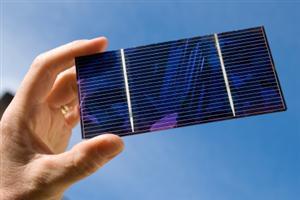
How does a homemade dye-sensitized solar cell compare to a standard silicon one? Dye-sensitized cells use a thin layer of titanium dioxide coated in raspberry juice to absorb light. Silicon cells use a solid semiconductor chip instead.
You build a dye-sensitized cell from two glass plates, titanium dioxide, raspberry juice, and iodide solution. Then you measure the open-circuit voltage and short-circuit current of each cell under the same sunlight.
The results show which cell type produces more power and by how much.
Hypothesis
The hypothesis is that silicon based solar cells are more efficient than normal silicon based solar cells, and are therefore able to produce more power, with the same amount of light.
Science Concepts Learned
Dye-Sensitized Solar Cells
Instead of a solid semiconductor chip, these cells use a thin layer of titanium dioxide coated in raspberry juice to absorb light and generate power. You build the cell from two glass plates, titanium dioxide, raspberry juice, and iodide solution, then measure its open-circuit voltage and short-circuit current. Placing it side by side with a standard silicon cell under the same sunlight shows how each design converts light into electricity at different rates.
Method & Materials
You will assemble a dye-sensitized solar cell, measure the open circuit voltage and short circuit current, and then repeat the measurements with a silicon based solar cell.
You will need two glass plates, a digital multimeter, an ammeter, ethanol, an eye dropper, titanium dioxide solution, raspberry juice, a pencil, iodide solution, tissue paper, a small plate, two jumper wires with crocodile clips, two binder clips, and a silicon solar cell from an old calculator.
MEL Physics — hands-on physics experiment kits delivered monthly — real experiments, not just reading. (Affiliate link)
See what’s includedResults
The results show that the silicon based solar cell has a higher open circuit voltage and short circuit current compared to the dye-sensitized solar cell. This proves that the hypothesis is true and that silicon based solar cells are more efficient than normal silicon based solar cells.
Why do this project?
This science project is interesting because it compares two types of solar cells to see which one is more efficient. It also uses simple materials that are easy to find and inexpensive.
Also Consider
Experiment variations include using different fruit juices such as blueberry or cranberry juice, and repeating the experiment using a larger glass slide.
Full project details
Additional information and source material for this project are available below.Related videos
These videos explain the science behind this project and demonstrate key concepts used in the experiment.
Share this Science Project:
Browse by Grade
Related Science Fair Project Ideas
Set up three solar cells with different cooling methods and discover how temperature changes their power output.
Hard
Mount tiny mirror chips on plywood and aim them at one spot to build a solar furnace of any size.
Hard

Photograph red, yellow, green, and blue balls at increasing ocean depths to discover which colors vanish first.
Hard
Share this Science Project: