

Extreme Temperatures and Bacterial Survival
Hard
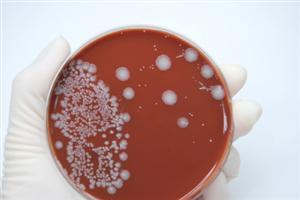
Does extreme heat kill bacteria more effectively than extreme cold? Some bacteria can survive conditions that seem impossible. The answer depends on the species and the temperature.
You store four types of bacteria at six temperatures ranging from 40°C down to -60°C. Each day, you remove a set of vials and let them return to room temperature. After seven days, you plate samples on blood agar and count the surviving colonies.
Comparing colony counts across temperatures shows whether heat or cold is more lethal to each species.
Hypothesis
The hypothesis is that extremely high temperatures will kill more bacteria than extremely low temperatures.
Science Concepts Learned
Temperature and Bacterial Survival
Whether germs live or die depends on the species and the temperature they face. One experiment stores four types of bacteria at six temperatures ranging from 40°C down to -60°C. Each day, a set of vials returns to room temperature. After seven days, samples plate on blood agar and surviving colonies get counted. Comparing colony counts across temperatures reveals which species survive each extreme — and whether heat or cold proves more lethal.
Method & Materials
You will make a turbidity suspension in normal saline solution for each different bacterium, separate the solution between vials, label them according to their names and temperatures, store them at the respective temperatures, and then count the number of bacteria colonies killed.
You will need 7500 micro liters of Bacillus Cereus, Clostridium Perfringens, Mycobacterium Tuberculosis, and Salmonella, cotton buds, normal saline solution, 120 vials/test tubes with stoppers, 120 Petri dishes filled with blood agar, a box of disposable plastic pipette tips, a 10 micro liter pipette, a 250 micro liter pipette, a calorimeter, goggles, and a lab coat.
Eureka Crate — engineering & invention kits for ages 12+ — monthly projects that build real-world skills. (Affiliate link)
See what’s includedResults
The results of this experiment showed that extreme high temperatures killed more bacteria than extreme low temperatures. This information is important for scientists to develop effective methods for killing harmful bacteria.
Why do this project?
This science project is interesting because it explores the effects of extreme temperatures on the growth of bacteria, which is an important factor in understanding how to prevent contamination.
Also Consider
Variations of this experiment could include studying the nature of the bacteria used in the experiment and exploring other alternatives to kill bacteria.
Full project details
Additional information and source material for this project are available below.Related videos
These videos explain the science behind this project and demonstrate key concepts used in the experiment.
Share this Science Project:
Browse by Grade
Related Science Fair Project Ideas

Grow bacteria from four differently washed chopsticks on blood agar and find out how long antibacterial soap really needs to work.
Hard
Add garlic extract to E. coli in a petri dish and track whether the bacteria can grow at all over five days.
Hard

Open three types of baby food, leave them out for different lengths of time, and measure which one grows the most bacteria.
Hard
Share this Science Project: