

Antibacterial vs. Regular Soap
Hard
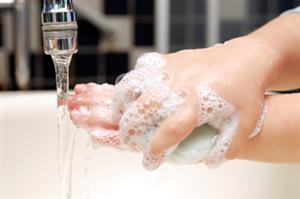
Is the extra cost of antibacterial soap actually worth it?
Dip four chopsticks into saliva, then wash them under different conditions: one stays unwashed as a control, one gets two minutes with regular soap, one gets twenty seconds with antibacterial soap, and one gets two minutes with antibacterial soap. Touch each chopstick to its own blood agar dish and track bacteria colony growth over five days.
The results show antibacterial soap needs a full two minutes of washing to kill all bacteria. A quick twenty-second wash only kills some, though it still outperforms regular soap.
Hypothesis
The hypothesis is that antibacterial soap will kill more bacteria than normal soap.
Science Concepts Learned
Hygiene and Handwashing
Washing with soap and water removes germs, but scrubbing time matters as much as the soap you choose. Chopsticks dipped in saliva are washed under different conditions, including twenty seconds versus two minutes with antibacterial soap. Tracking bacteria colony growth on each blood agar dish over five days shows that longer washing time removes more germs from the surface.
Method & Materials
You will prepare petri dishes with blood agar, collect saliva, and mark chopsticks. You will then dip the chopsticks into the saliva and wash them with antibacterial and non-antibacterial soap for different lengths of time. Finally, you will measure the size of the bacteria colony growth.
You will need 4 petri dishes with blood agar, some human saliva, 4 disposable chopsticks, a ruler, antibacterial soap, non-antibacterial soap, a stopwatch, a disposable cup, and a permanent marker pen.
Eureka Crate — engineering & invention kits for ages 12+ — monthly projects that build real-world skills. (Affiliate link)
See what’s includedResults
The results showed that the antibacterial soap was only effective in killing all the bacteria if the chopstick was washed for more than 2 minutes. The non-antibacterial soap was not as effective as the antibacterial soap. This experiment proves that antibacterial soap is more effective in killing bacteria than regular soap.
Why do this project?
This science project is interesting because it tests the effectiveness of antibacterial soap against regular soap in killing bacteria. It also shows that washing our hands with warm water and regular soap is sufficient to ward off infections.
Also Consider
Variations of this experiment include touching the petri plate with a finger instead of using saliva, and repeating the experiment under different room temperatures and/or lighting conditions.
Full project details
Additional information and source material for this project are available below.Related videos
These videos explain the science behind this project and demonstrate key concepts used in the experiment.
Share this Science Project:
Related Science Fair Project Ideas
Add garlic extract to E. coli in a petri dish and track whether the bacteria can grow at all over five days.
Hard
Open three types of baby food, leave them out for different lengths of time, and measure which one grows the most bacteria.
Hard
Scratch plastic bottles to different levels of cloudiness and discover how much sunlight needs to pass through to kill bacteria in the water.
Hard
Share this Science Project: