Search for Science Fair Projects

1000 Science Fair Projects with Complete Instructions

Electricity Science Fair Project

LED vs. Incandescent Brightness per Watt
Medium
LED vs. Incandescent Brightness per Watt | Science Fair Projects | STEM Projects
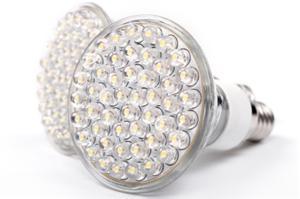
How many watts does an LED bulb need to match a 60-watt incandescent bulb? You set up a lux meter one meter from each bulb and measure the brightness. You test seven LED bulbs ranging from 1.5 watts to 10.5 watts. Then you compare each reading to the 60-watt incandescent bulb. The 60-watt incandescent produced 812 lux. A 7.5-watt LED matched it at 785 lux. That means the LED needs roughly one-eighth the power to produce the same brightness.

Hypothesis

The hypothesis is that the LED lamp will require less power to produce the same level of brightness as an incandescent lamp.

Method & Materials

You will wire cables and plugs to the incandescent and LED lamp sockets, measure the brightness of each lamp using a lux meter, and record the measurements in a table.
You will need a 60 watt incandescent light bulb, a socket for the incandescent lamp, LED bulbs of several wattage ratings, a socket for the LED bulb, electric cables, 3-pin plugs, a lux meter, and a ruler.

MEL Physicshands-on physics experiment kits delivered monthly — real experiments, not just reading. (Affiliate link)

See whats included

Results

The results showed that the 60W incandescent lamp provided the same brightness as a 7.5W LED lamp, proving that LED lamps provide the same brightness at a lower wattage and power consumption compared to the incandescent lamps.

Why do this project?

This science project is interesting because it compares two types of light bulbs and shows how LED lamps can provide the same brightness as an incandescent lamp but with less power.

Also Consider

Variations of this experiment could include comparing a fluorescent light with LED lamps, or comparing the brightness of the LED lamp and incandescent lamp at different distances from the light source.

Full project details

Additional information and source material for this project are available below.

Related videos

These videos explain the science behind this project and demonstrate key concepts used in the experiment.
Share this Science Project:

Related Science Fair Project Ideas

Soil Type, Fertilizer, and Electrical Conductivity
Insert copper electrodes into sand, clay, loam, and fertilized loam to discover which soil carries the strongest electrical current.
Medium
Hair Color and Static Electricity
Rub a balloon on four different-colored wigs and count paper squares to see which hair color builds the most static charge.
Medium
Wire Temperature and Electrical Resistance
Run current through a copper coil and track how resistance climbs and current drops as the wire heats up.
Medium
Share this Science Project: