Search for Science Fair Projects

1000 Science Fair Projects with Complete Instructions

Bacteriology Science Fair Project

Acne Medications and Bacteria Inhibition
Hard
Acne Medications and Bacteria Inhibition | Science Fair Projects | STEM Projects
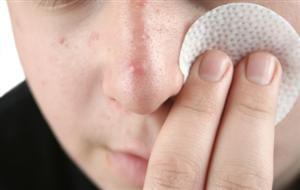
Can common acne medications stop the bacteria that cause breakouts? Propionibacterium acnes (P. acnes) lives on skin and feeds on oil from pores. When it multiplies too fast, it triggers inflammation. You spread P. acnes bacteria across three agar plates. On each plate, you place a filter paper disk soaked in one of three medications: Tetracycline, Clindamycin, or Benzoyl peroxide. Each medication is mixed at the same concentration (5mg in 10ml water). After four days, you measure the inhibition zone (the bacteria-free ring around each disk). All three medications create a clear zone. Tetracycline produces the largest at 48mm. Clindamycin follows at 44mm. Benzoyl peroxide shows the smallest zone at 27mm.

Hypothesis

The hypothesis is that acne medications effectively inhibit the growth of bacteria that causes acne.

Method & Materials

You will prepare Petri dishes with agar, mix acne medications with water, mix bacteria with water, swab the Petri dishes with the bacteria, and place filter paper discs with the medications in the center of the Petri dishes.
You will need Petri dishes, a swab, water, filter paper, test tubes, a measuring cylinder, a pippette, Tetracycline, Clindamycin, Benzoyl peroxide, a beaker of water, P. acne bacteria culture, a forcep, a digital weighing scale, and a marker pen.

Results

The results showed that all three anti-acne medications were able to inhibit the growth of the P. acne, with Tetracycline resulting in the largest inhibition zone.

Why do this project?

This science project is interesting because it tests the effectiveness of different acne medications on the bacteria that causes acne.

Also Consider

Variations of this project could include testing different types of acne medications, such as Erythromycin, Azelaic acid, and Oregano oil. Another variation could be testing the effectiveness of the medications at varying ambient temperature and humidity conditions.

Full project details

Additional information and source material for this project are available below.

Related videos

These videos explain the science behind this project and demonstrate key concepts used in the experiment.
Share this Science Project:

Related Science Fair Project Ideas

Antibacterial vs. Regular Soap
Grow bacteria from four differently washed chopsticks on blood agar and find out how long antibacterial soap really needs to work.
Hard
Garlic Extract and Bacterial Growth
Add garlic extract to E. coli in a petri dish and track whether the bacteria can grow at all over five days.
Hard
Baby Food and Bacteria Growth Over Time
Open three types of baby food, leave them out for different lengths of time, and measure which one grows the most bacteria.
Hard
Share this Science Project: