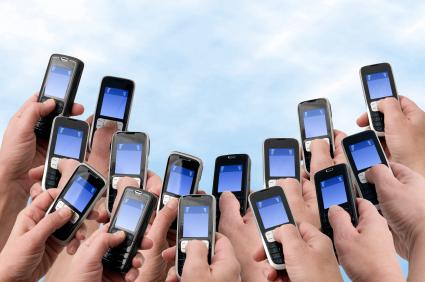
Hypothesis
Cell phone radiation contains sufficient energy to cook popcorn.
Overview
Cell phone radiation
Since the cellphone became commercially available, the number of cellphone users has increased steadily year-on-year. Internationally, there are at present, over 4.3 billion users. The widespread and regular use of cell phones has raised concerns: does cell phone radiation negatively impact the health of users?
Cell phones operate on electromagnetic radiation. Such radiation is within the frequency range of microwave signals. Microwave radiation is known to cause dielectric heating. Human tissue qualifies as a dielectric material. This means that the tissue on our face will experience a slight increase in temperature when we use a cell phone. However, this increase is minimal and can be controlled by the process of blood circulation.
Some of the radio signals that are by cell phones will be absorbed by the skull. However, cell phones typically do not generate more than 4 watts of power. Thus, the power in a cellphone's signal will probably be sufficient to heat up skin and bone tissue slightly, and will probably not cause any permanent damage.
Scientific Terms
Electromagnetic radiation, microwave signals, dielectric heating, dielectric material, radiowaves
Conclusion
The hypothesis holds true: cell phone radiation was not intense enough to cook the dried corn seeds.
Studies have shown that the use of cell phones do not cause cancer or any other health problems to users. However, we are often advised to minimize our exposure to cell phone radiation. Most cell phones come with hands-free devices such as speakers or earplugs. These minimize direct exposure to cell phone radiation.
Also consider
Try to cook an egg instead.science fair project
Place the phone near a glass of water. Is there an increase in the temperature of the water?science fair project
References
Mobile phone radiation and health - http://en.wikipedia.org/wiki/Mobile_phone_radiation_and_health
Physicist debunks cell phone viral ad - http://www.wired.com/underwire/2008/06/cellphones-cant/
Related videos
These videos explain the science behind this project and demonstrate key concepts used in the experiment.