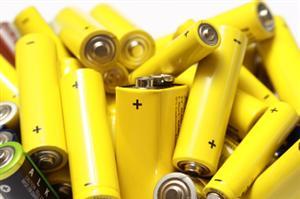
Do batteries drain faster in a warm room or a cool one? You test three brands of AA battery at three temperatures: 18°C, 22°C, and 26°C. Each battery powers an identical small table fan.
You time how many minutes the fan runs before each battery dies. The room temperature is set with an air conditioner and held steady during each test.
Temperature makes only a small difference. Across all three temperatures, the Energizer battery lasts the longest and the Eveready runs out first.
Hypothesis
The hypothesis is that batteries will last longer at around room temperature (about 26°C).
Even small shifts in temperature can change how everyday devices perform. Testing batteries at 18°C, 22°C, and 26°C shows whether a few degrees makes a difference. In this experiment, temperature makes only a small difference, yet one brand still outlasts the others at every setting.
Temperature affects how efficiently a battery releases its stored energy. To find out by how much, you test three brands of AA battery — Energizer, Duracell, and Eveready — at 18°C, 22°C, and 26°C. Each battery powers an identical small table fan, and you time how many minutes the fan runs before each battery dies. An air conditioner holds the room temperature steady during each test. As it turns out, temperature makes only a small difference. Across all three temperatures, the Energizer battery lasts the longest and the Eveready runs out first.
Method & Materials
You will test the performance of three different types of batteries at three different temperatures.
You will need an air-conditioned room, three Energizer AA size batteries, three Duracell AA size batteries, three Eveready AA size batteries, three AA battery-operated table fans, a clock or stopwatch, and an assistant.
MEL Physics — hands-on physics experiment kits delivered monthly — real experiments, not just reading. (Affiliate link)
The results of the experiment showed that there was not much difference in the durability of the battery as the temperature changed. However, it was found that the Energizer battery lasted the longest and the Eveready battery was the fastest to go flat.
Why do this project?
This science project is interesting because it shows how temperature affects the life of a battery, which is something that many people don't think about.
Also Consider
To further explore this experiment, you could repeat it at a larger range of different temperatures from 0°C to 80°C. You could also repeat the experiment by using rechargeable batteries.
Full project details
Additional information and source material for this project are available below.