

Driving Speed and Fuel Economy
Hard
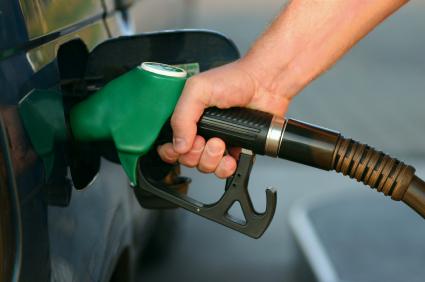
How much farther can a car travel on the same fuel at a slower speed? You might guess that faster driving burns more gas. This project measures exactly how much more.
You fill five different cars with 20 liters of gasoline each. Each car drives at a steady 90 km/h until the tank runs low. Then you repeat the test at 110 km/h.
Every car goes 20% to 30% farther at the slower speed. The difference holds across all five models tested.
Hypothesis
The hypothesis is that driving at 90 km/h (about 55 mph) produces better fuel economy than driving at 11 km/h (about 70 mph).
Science Concepts Learned
Fuel Efficiency
How much farther can a car travel on the same fuel at a slower speed? Five different cars each run on 20 liters of gasoline — first at a steady 90 km/h, then again at 110 km/h. Every car goes 20% to 30% farther at the slower speed, and that difference holds across all five models tested.
Aerodynamic Drag
At higher speeds, air pushes harder against a car's body. That greater aerodynamic drag forces the engine to burn fuel faster just to maintain pace. When five cars each drive on 20 liters of gasoline, every one travels 20% to 30% farther at 90 km/h than at 110 km/h, showing how much extra fuel the added air resistance consumes.
Method & Materials
You will need five drivers and five types of cars, and 250 liters of gasoline (about 65 gallons). The drivers will drive the cars at a constant speed of 90 km/h and 110 km/h, and record the distance traveled on 20 liters (or 5 gallons) of gasoline.
You will need five drivers, five types of cars, and 250 liters of gasoline (about 65 gallons).
Eureka Crate — engineering & invention kits for ages 12+ — monthly projects that build real-world skills. (Affiliate link)
See what’s includedResults
The results of the experiment showed that all of the cars were able to travel for longer distances (of about 20% to 30%) when driven at 90 km/h compared to when the cars travelled at speeds of 110km/h.
Why do this project?
This science project is interesting because it shows how much fuel can be saved by driving at a slower speed. It also shows how different cars can have different fuel efficiencies.
Also Consider
Variations: Repeat the science project, this time, using vehicles with higher engine capacities. The science project experiment can be repeated using different grades of gasoline.
Full project details
Additional information and source material for this project are available below.Related videos
These videos explain the science behind this project and demonstrate key concepts used in the experiment.
Share this Science Project:
Related Science Fair Project Ideas

Park a car in artificial fog and test whether drivers stop closer to the correct distance when it has zero, one, or two rear fog lights.
Hard
Record 18 hours of highway traffic on video and score each time window for speed, volume, and pollution potential.
Hard
Drive five cars on the same fuel supply at full and reduced tire pressure to measure how much mileage changes.
Hard
Share this Science Project: