

Wood Type and Moisture Shrinkage
Medium
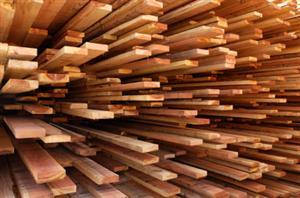
Why does a wooden door sometimes stick in its frame during humid weather? Wood absorbs and releases moisture, which changes its size. Different wood types shrink by different amounts.
You cut equal blocks of four woods:
- redwood
- teak
- black oak
- red maple
You measure each block. Then you dry them in an oven at 120 degrees Celsius for 24 hours. After drying, you measure again. Black oak shrinks the most. Redwood shrinks the least.
Hypothesis
The hypothesis is that wood of all types will expand when they absorb moisture and shrink when they lose moisture.
Science Concepts Learned
Wood Properties
Wood flexes with humidity. It absorbs moisture and swells. It loses moisture and shrinks. That is why a wooden door sometimes sticks in its frame during humid weather. Drying equal blocks of four wood types shows each one shrinks by a different amount.
Method & Materials
You will cut four types of wood into blocks of the same size, label them, and place them in an oven for 24 hours. You will then measure the change in dimension of the wood after being dried in the oven, and at normal room humidity.
You will need a redwood block, a teak wood block, a black oak wood block, a red maple block, a caliper, an oven, a pair of gloves, and a black marker pen.
Tinker Crate — science & engineering build kits for ages 9–12 — real tools, real experiments, delivered monthly. (Affiliate link)
See what’s includedResults
It was observed that all four types of wood shrank the most along the growth rings. The black oak showed the biggest change in dimensions compared to the other three types of wood. Redwood showed the least change in dimensions.
Why do this project?
This science project is interesting because it shows how wood changes size when exposed to different levels of humidity. It also shows how the type of wood affects the amount of expansion and shrinkage.
Also Consider
To improve the reliability and accuracy of the results, a larger number of wood samples should be used. This science project can also be repeated with other types of woods like Pine, Fir, Hemlock or Birch.
Full project details
Additional information and source material for this project are available below.Related videos
These videos explain the science behind this project and demonstrate key concepts used in the experiment.
Share this Science Project:
Related Science Fair Project Ideas
Pour water loaded with leaves, grass, soil, and plastic over flat and dome drain covers to see which one stays clear.
Medium

Build three model bridges with different side coverings and measure which one tilts the most in crosswind from a fan.
Medium

Drop a sandbag into a water tank to create a wave and measure whether a wall or an artificial mangrove swamp blocks it better.
Medium
Share this Science Project: