

Car Seat Materials and Static Charge
Medium
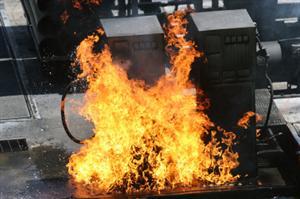
Why do you sometimes get a shock when you touch a car door? The seat material and your clothing both play a role. Static electricity (a buildup of electric charge) forms when two surfaces rub together.
You rub a balloon against different clothing fabrics on a fabric seat and a leather seat. Then you hold the balloon over tiny paper pieces and count how many it picks up. More paper pieces means more static charge.
The results show which seat and clothing pairs produce the most static buildup.
Hypothesis
The hypothesis is that leather car seats produce more static electricity compared to fabric seats.
Science Concepts Learned
Triboelectric Effect
The triboelectric effect is why you sometimes get a shock stepping out of a car. Static charge forms when two surfaces rub together, and different material pairs transfer different amounts of charge. Rubbing a balloon against clothing fabrics on both a fabric seat and a leather seat reveals which combinations produce the most static buildup.
Method & Materials
You will connect a copper plate to a ground connection, cut out 200 pieces of paper, discharge the balloon by rolling it over the copper plate, and rub the balloon with different materials.
You will need a balloon, a copper plate, a ground connection, a jumper wire with crocodile clips, a fabric car seat, a leather car seat, a polyester cloth, a cotton cloth, a nylon cloth, a silk cloth, a flat tray, a ruler, a large sheet of paper, and a paper knife.
MEL Physics — hands-on physics experiment kits delivered monthly — real experiments, not just reading. (Affiliate link)
See what’s includedResults
The results showed that the car seat made of fabric or covered with cotton shirts produced the least amount of static electricity. The leather car seat produced more static compared to the fabric seats. This proves the hypothesis to be true.
Why do this project?
This science project is interesting because it investigates the static electricity produced by different car seat materials. It also shows how static electricity can be dangerous in certain situations.
Also Consider
Experiment variations could include using a comb instead of a balloon, or testing different car seat materials such as seats made from cloth or Vinyl or PVC.
Full project details
Additional information and source material for this project are available below.Related videos
These videos explain the science behind this project and demonstrate key concepts used in the experiment.
Share this Science Project:
Related Science Fair Project Ideas

Insert copper electrodes into sand, clay, loam, and fertilized loam to discover which soil carries the strongest electrical current.
Medium
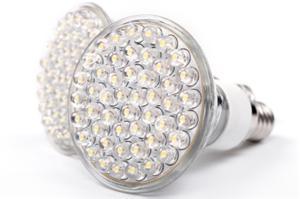
Measure LED bulbs from 1.5 to 10.5 watts with a lux meter and find which tiny wattage matches a 60-watt incandescent bulb.
Medium

Rub a balloon on four different-colored wigs and count paper squares to see which hair color builds the most static charge.
Medium
Share this Science Project: