

Strategy Games and Spatial Reasoning
Easy
Can playing chess or solving puzzles sharpen your ability to rebuild a shape from memory? You show a photo of a 20-piece Lego structure to four participants for 30 seconds. The four are:
- A chess player
- A Sudoku solver
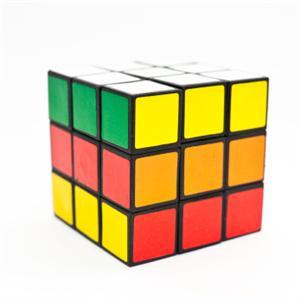
- A Rubik's Cube expert
- A non-player
Each person has five minutes to rebuild the shape. You repeat this with five different photos. The three strategy players place 10 to 18 tiles correctly. The non-player places only 3 to 5.
Hypothesis
The hypothesis is that people who like to solve puzzles and play strategic games will possess better spatial reasoning skills.
Science Concepts Learned
Spatial Reasoning
Strategy games and puzzles may do more than pass the time — they could sharpen your ability to think about shapes and how objects fit together. You show a photo of a 20-piece Lego structure to four participants for 30 seconds: a chess player, a Sudoku solver, a Rubik's Cube expert, and a non-player. Each person then has five minutes to rebuild the shape. You repeat this with five different photos. The three strategy players place 10 to 18 tiles correctly. The non-player places only 3 to 5.
Method & Materials
You will select four participants - a chess player, sudoku enthusiast, rubix cube expert and a non-player - and show them photos of shapes built with Lego tiles. They will have five minutes to reconstruct the shape in the photo using the Lego set provided.
You will need a regular chess player, a regular sudoku enthusiast, a Rubic cube expert, a person who does not do puzzles or play strategy games (non-player), four Lego puzzle sets, five photos of shapes built with 20 Lego tiles, a stopwatch, and an assistant.
Tinker Crate — science & engineering build kits for ages 9–12 — real tools, real experiments, delivered monthly. (Affiliate link)
See what’s includedResults
The results showed that the chess player, sudoku puzzle player, and the rubix cube expert were able to assemble more Lego tiles correctly than the non-player participant. This proves that people who like to solve puzzles and play strategic games possess better spatial reasoning skills.
Why do this project?
This science project is interesting because it shows how playing strategy games and solving puzzles can help improve spatial reasoning skills.
Also Consider
Variations of this science project could include using standard tests for evaluating spatial reasoning abilities, comparing the spatial reasoning abilities between genders and persons of different age groups, and repeating the experiment with a larger number of participants.
Full project details
Additional information and source material for this project are available below.Related videos
These videos explain the science behind this project and demonstrate key concepts used in the experiment.
Share this Science Project:
Related Science Fair Project Ideas

Fire eight rapid commands at a group and find out whether anyone can recall which task came third on the list.
Easy
Drop a ruler between someone's fingers and measure how far it falls to compare response times between boys and girls.
Easy

Tell one group to memorize details from a TV show and tell another to just watch. Then quiz both to compare recall.
Easy
Share this Science Project: