| Complexity level: | 5 |
| Time required: | 1 hour required for set-up, 90 minutes required to collect data, 1 hour to analyze, cleanup and discuss. |
| Material availability: | You will need to involve a group of participants of the same age. For example, you could have a classroom of students participate. |
| Safety concerns: |
Hypothesis
Overview
Scientific Terms
Materials
Eureka Crate — engineering & invention kits for ages 12+ — monthly projects that build real-world skills. (Affiliate link)
See what’s includedProcedure
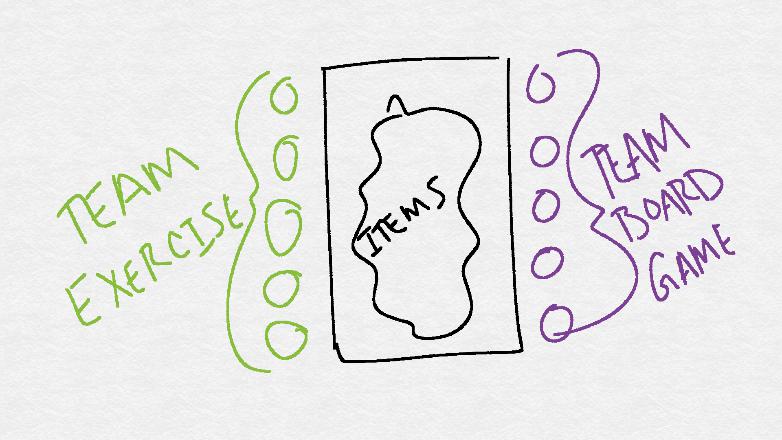
- Divide the participants into two teams: Exercise and Board Game.
- Assemble 20 household items on a table. Cover them with the tablecloth.
-
Ask the teams to stand on either side of the table. Everyone should have paper and a pen or pencil.
 ;
; - Remove the tablecloth covering the items. The participants get 45 seconds to memorize the items on the table. Do not write anything down yet!
- After the 60 seconds are up, the items are covered again.
- The participants get 2 minutes to write down as many items as they can remember from the table.
- Now, the teams will perform their separate tasks.
- Team exercise: Have the participants play dodgeball for 20 minutes. Team board game: read their books for 20 minutes.
- Teams should now return to the table.
- A new set of items will be placed beneath the tablecloth. Repeat steps 3 - 6.
- For each participant, compare the two scores.
Observations
|
Participant's name: |
Exercise or Board Game? |
|
TEST #1 (before exercise / games) |
TEST #2 (after exercise / games) |
|
1. |
1. |
|
2. |
2. |
|
3. |
3. |
|
4. |
4. |
|
5. |
5. |
|
6. |
6. |
|
7. |
7. |
|
8. |
8. |
|
9. |
9. |
|
10. |
10. |
|
11. |
11. |
|
12. |
12. |
|
13. |
13. |
|
14. |
14. |
|
15. |
15. |
|
16. |
16. |
|
17. |
17. |
|
18. |
18. |
|
19. |
19. |
|
20. |
20. |
|
TOTAL remembered: |
TOTAL remembered: |
References
Related video
These videos explain the science behind this project and demonstrate key concepts used in the experiment.