How does the magic milk experiment work? Let's go through each ingredient in the experiment!
What does the milk do?
Milk is mostly made of water, protein, and fat molecules. For this experiment to work well, it's important to use whole milk, which has more fat molecules.
What does the food coloring do?
The food coloring dissolves into the milk, so it follows the movement of the molecules in the milk. When you see the colors moving, the milk is also moving along!
What does the dish soap do?
Dish soap is made of soap molecules, which have two different parts. One part has a negative charge that is attracted to the positive charges on protein molecules and water molecules and could be repelled by the negative charges on protein molecules. The other part of soap molecules is hydrophobic, meaning it's uncharged and repels water. That part is attracted to the hydrophobic uncharged fat molecules. These properties of soap make it a surfactant, which reduces the surface tension of liquids.
When you first put the dish soap on the milk, the high surface tension of milk is broken up by the soap. The negative end of the soap molecules line up with the positive end of the water molecules. This makes the soap molecules run out in all directions on the surface of the milk, pushing the food coloring to the edge of the plate. This will also happen when you do this experiment with a plate of water instead of milk.
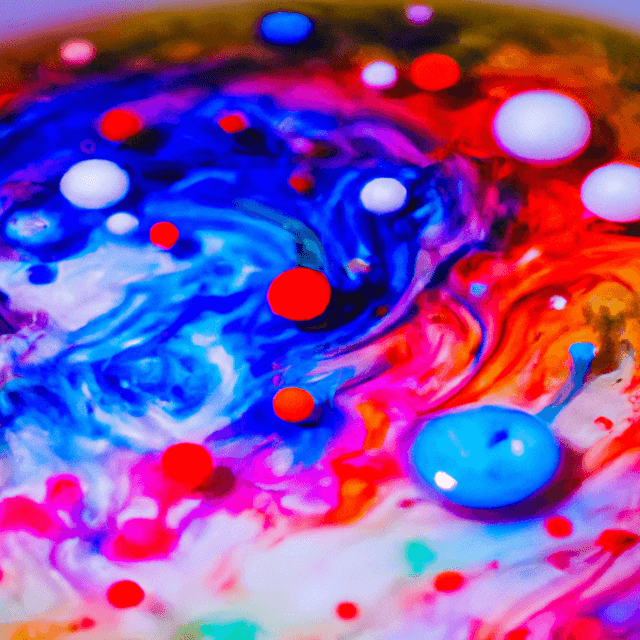
However, the amazing thing about the magic milk experiment is that after the initial contact between the milk and dish soap, when you leave the cotton swab in the milk or bring it to the food coloring at the edge of the plate, the colors are constantly moving. The soap's uncharged parts interact with the uncharged fat molecules, while the soap's negative charge interacts with charges on protein molecules and water molecules. All these different attraction and repelling interactions between the soap and milk cause the liquid to twist and turn, which we see as a color explosion!
What does the paper do?
The paper will absorb both the food coloring and milk. After the paper dries, you'll have a magic milk painting!