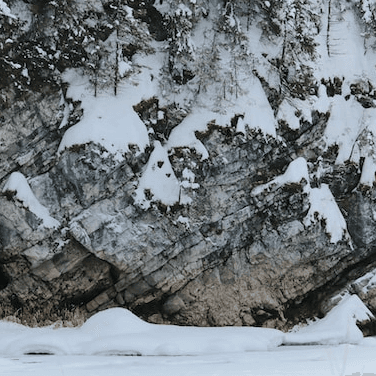
What happens when water freezes inside a crack in a rock? Water expands as it turns to ice. That expansion pushes outward with enough force to split solid rock apart.
You use plaster of Paris to model this process. Soak the plaster in water and then freeze it. Watch how the ice wedging (water freezing and expanding in gaps) cracks the plaster.
This is the same process that breaks apart mountains and roads over many winters.
Hypothesis
The hypothesis is that freezing water will cause the plaster of Paris to crack and break apart, just like ice wedging in nature.
When water seeps into a crack in a rock and freezes, it expands with enough force to split solid rock apart. That same process — ice wedging — breaks apart mountains and roads over many winters. You model it here by soaking plaster of Paris in water and freezing it overnight, then watching the cracks form.
Water seeps into cracks in rock, freezes, and expands with enough force to split solid rock apart. You can model this process with plaster of Paris: soak it in water, freeze it overnight, and watch what happens. The same expansion that breaks apart mountains and roads over many winters will crack the plaster apart too.
Method & Materials
You will mix plaster of Paris and water, pour it into a cup with a water balloon, let it harden, freeze it overnight, and then observe the cracks and breaks that form. Remember to do a control with a cup of plaster of Paris with a balloon filled with air (no water).
You will need plaster of Paris, water, paper cups, balloons, and a tray to catch any mess.
Tinker Crate — science & engineering build kits for ages 9–12 — real tools, real experiments, delivered monthly. (Affiliate link)
After freezing the plaster cups, students will observe how the water balloon caused the plaster to crack and break apart, just like ice wedging in nature, a form of mechanical weathering. One interesting observation is that the control cup with a balloon filled with air did not crack or break.
Why do this project?
This experiment is interesting because it demonstrates how mechanical weathering like ice wedging can break down rocks over time. It also allows for hands-on learning and observation.
Also Consider
To vary the experiment, try using different materials such as rocks soaked in water. You could also change the temperature or amount of water used to see how it affects the cracks and breaks that form.
Full project details
Additional information and source material for this project are available below.
These videos explain the science behind this project and demonstrate key concepts used in the experiment.
Get creative and explore how water can break down rocks with this exciting experiment! Learn how to create a rock using plaster of Paris and a water balloon, and even try a tasty variation with chocolate syrup that turns into a shell!