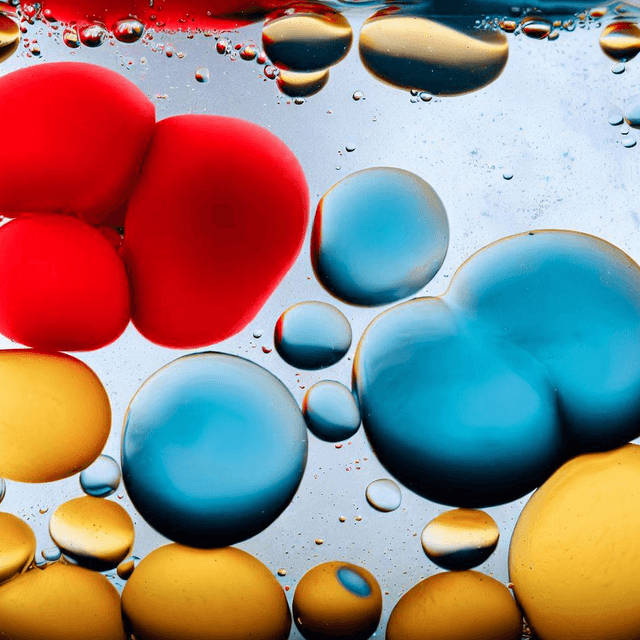
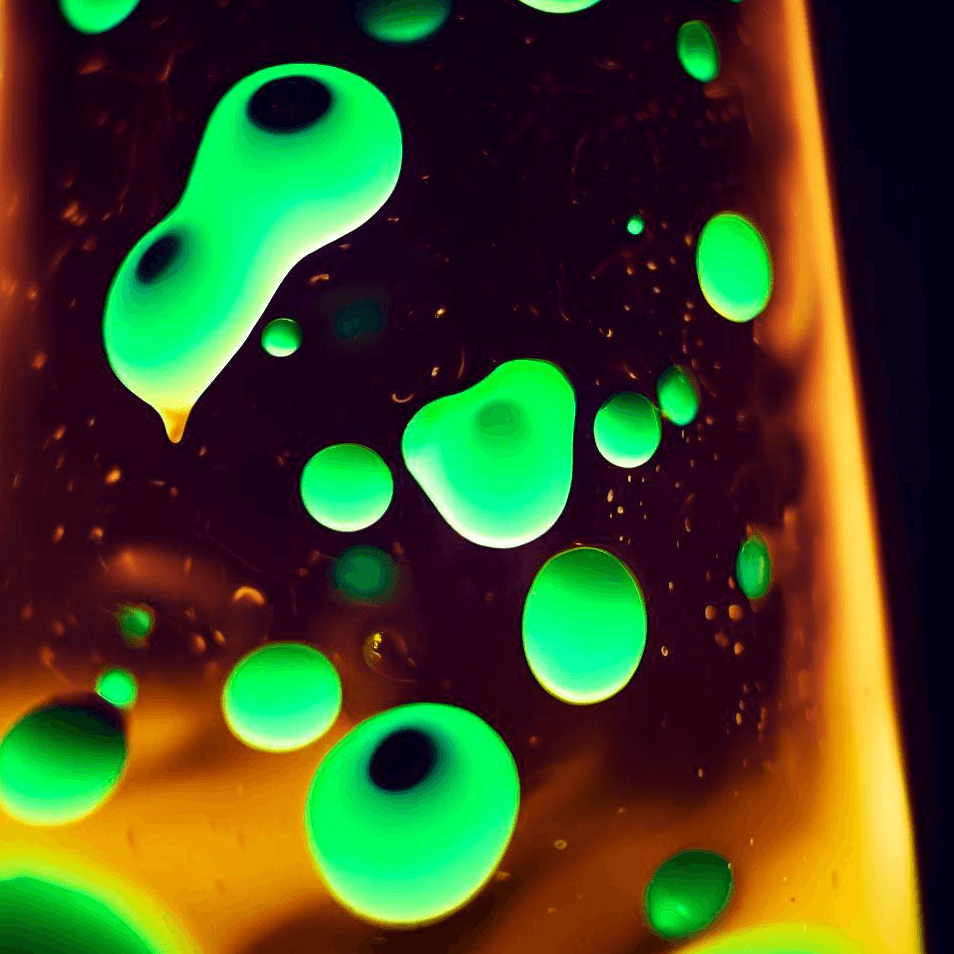
What happens when you mix baking soda and vinegar inside a layer of oil? The two ingredients react and create gas bubbles. Those bubbles carry colored water up through the oil.
You fill a bottle with oil and water. Then you add food coloring and drop in baking soda. A splash of vinegar starts the fizzy reaction. Colored blobs rise and fall as new bubbles form.
This project shows two ideas at once. Oil and water refuse to mix. And a chemical reaction can push one liquid through another.
Hypothesis
The hypothesis is that when baking soda reacts with vinegar, it will create bubbles that rise through the oil, resembling a lava lamp.
Oil and water refuse to mix — but a chemical reaction can push one through the other. You fill a bottle with oil and colored water, drop in baking soda, then add a splash of vinegar. The two ingredients react and produce gas bubbles. Those bubbles carry colored blobs up through the oil, and when they pop at the surface, the blobs sink back down. The cycle repeats as new bubbles form.
When baking soda and vinegar meet inside a layer of oil, they react and create carbon dioxide gas bubbles. Those bubbles attach to drops of colored water and carry them up through the oil. Colored blobs rise and fall as new bubbles form — showing that a chemical reaction can push one liquid straight through another.
Oil and water refuse to mix. Fill a clear bottle with both and they separate into layers. When you add baking soda and then a splash of vinegar, the two react and create gas bubbles. Those bubbles carry colored water up through the oil — but even through all that motion, the oil and water never combine into one liquid.
Method & Materials
You will carefully layer baking soda and then oil in a bottle. Next add colored vinegar using a pipette. Observe the reaction as bubbles form and rise, creating a captivating lava lamp effect.
You will need baking soda, a clear bottle, vegetable oil, vinegar, food coloring, a plastic cup, pipette or eye dropper, funnel, measuring cup, and spoon.
This science project is a great one to do because it allows you to create your very own lava lamp using simple ingredients from your kitchen. You will learn about the chemical reaction between baking soda and vinegar, and the properties of water and oil that make them hard to mix.
Also Consider
1. Try using different types of oil (e.g., olive oil, coconut oil) and observe if it affects the lava lamp's behavior.
2. Experiment with varying amounts of baking soda and vinegar to see how it impacts the intensity and duration of the bubbling reaction.
Full project details
Additional information and source material for this project are available below.
These videos explain the science behind this project and demonstrate key concepts used in the experiment.
Follow this step-by-step video to make your own baking soda lava lamp!
You can also make a lava lamp with alkaseltzer tablets instead of baking soda and vinegar! Check out how bubbly this lava lamp is!
You can make several colored lava lamps at the same time too! See how the layer of oil and water don't mix, but when the fizzy tablet is added to the water, the droplets of colored water start their constant movement in the lava lamp!