How can gas make water float inside oil? Water is normally denser than oil and sinks to the bottom. But when gas bubbles attach to a drop of water, they make it lighter. The drop floats up through the oil.
You pour oil over colored water in a clear bottle. Then you drop in an Alka-Seltzer tablet. The tablet reacts with water and releases carbon dioxide gas. That gas carries colored blobs upward. At the surface the gas escapes and the blob sinks back down.
The rising and sinking cycle repeats until the tablet dissolves completely.
Hypothesis
The hypothesis is that adding gas to water will change its density, causing it to float or sink in oil.
When an Alka-Seltzer tablet drops into colored water at the bottom of an oil-filled bottle, it reacts with the water and releases carbon dioxide gas. That gas attaches to drops of colored water and makes them lighter, so they float up through the oil. At the surface the gas escapes, the blob sinks back down, and the rising and sinking cycle repeats until the tablet dissolves completely.
Gas bubbles can change how dense something is. Water is normally denser than oil and sinks to the bottom. When an Alka-Seltzer tablet reacts with water, it releases carbon dioxide gas. That gas attaches to drops of colored water and makes them lighter. The drops float up through the oil. At the surface the gas escapes and the drops sink back down.
Water is normally denser than oil and sinks to the bottom — but gas bubbles can change that. In this project, you pour oil over colored water in a clear bottle, then drop in an Alka-Seltzer tablet. The tablet reacts with water and releases carbon dioxide gas. That gas attaches to drops of colored water, making each drop lighter. The drop floats up through the oil. At the surface, the gas escapes and the blob sinks back down. The rising and sinking cycle repeats until the tablet dissolves completely.
Immiscible liquids like oil and water refuse to mix. They always separate into layers. In this experiment, colored water sinks below the oil because water is denser. When an Alka-Seltzer tablet releases gas, the gas carries colored blobs upward through the oil. At the surface the gas escapes and the blob sinks back down. Through all this motion, the oil and water remain in separate layers.
Method & Materials
You will fill a bottle with oil and add water and food coloring. Then, drop an Alka-Seltzer tablet and observe the mesmerizing dance of colorful blobs.
You will need Alka-Seltzer or a similar effervescent tablet, vegetable oil, water, a tall clear plastic container, food coloring.
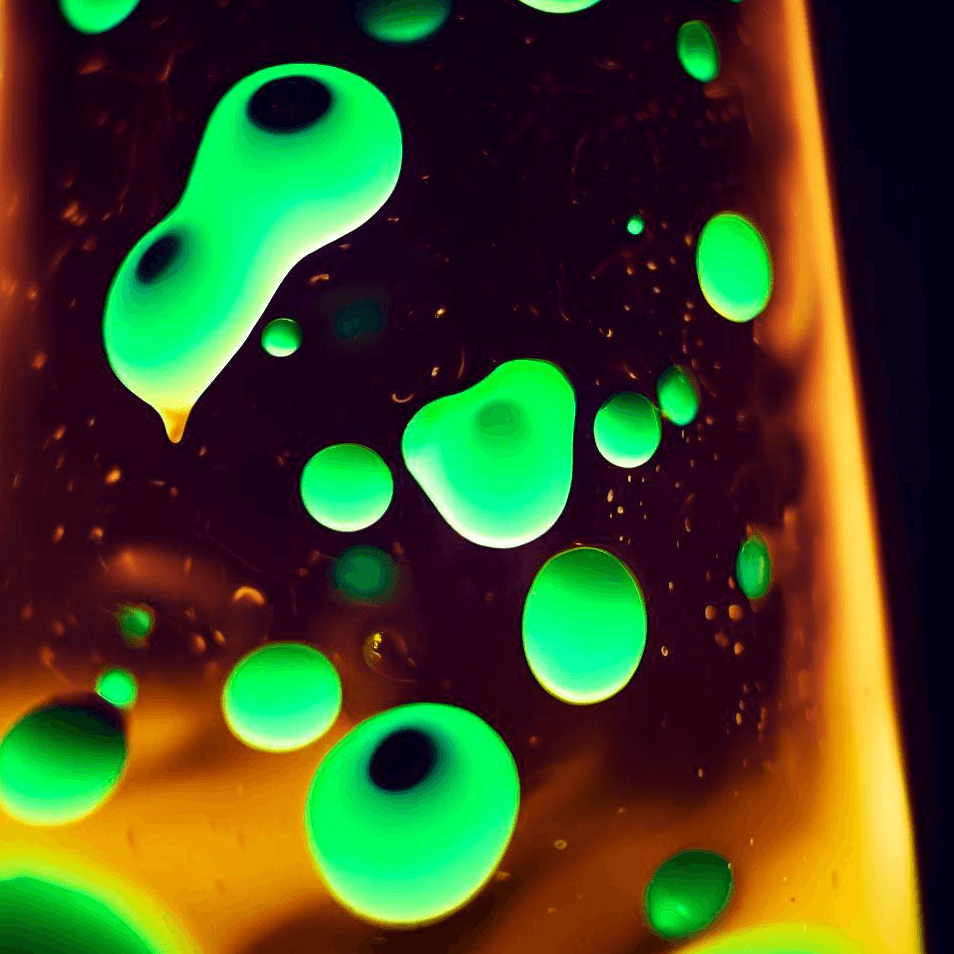
When the Alka-Seltzer tablet bubbles, the water and gas mixture floats up through the oil in a ball-shape, creating colorful blobs. As the gas bubbles pop at the top, the water sinks back down through the oil, completing the cycle. This project demonstrates the concept of density and how gas affects the buoyancy of objects.
Why do this project?
This science project is fascinating because it combines density and properties of liquid and gases in a visually captivating way. The dancing blobs of color in the homemade lava lamp make learning about science fun and exciting.
Also Consider
Vary the amount of Alka-Seltzer tablet to observe the effect on the movement of blobs. Try using different types of liquids, such as carbonated water or vinegar, instead of plain water, and compare the results.
Full project details
Additional information and source material for this project are available below.
These videos explain the science behind this project and demonstrate key concepts used in the experiment.
Follow along with the Cincinnati Museum Center in making an Alka-Seltzer lava lamp! Learn about density of water and oil, and the chemical reaction that happens when an Alka-Seltzer tablet is dropped in!
Find out why the colored water moves up and down in the lava lamp experiment!
Check out this close up video of colored water blobs moving up and down the lava lamp!