Can vinegar turn a raw egg into a bouncy rubber ball?
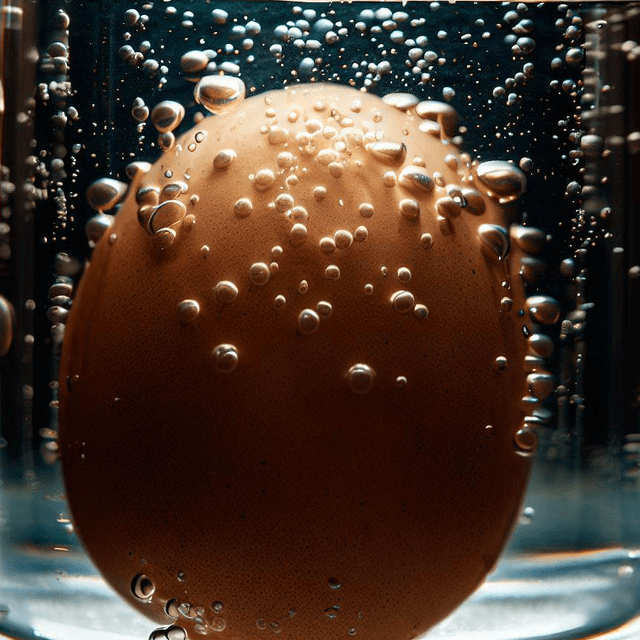
Place one raw egg in a jar of vinegar and a second in a jar of plain water. Over two to three days, the vinegar slowly dissolves the eggshell. Tiny bubbles form on the surface as the acid in the vinegar reacts with the calcium carbonate (the mineral that makes the shell hard). The water egg stays unchanged.
When the shell is gone, the egg feels soft and rubbery. Hold it up to compare the two eggs side by side and see what the acid left behind.
Hypothesis
The hypothesis is that the vinegar (acid) will react with the calcium carbonate (base) in the egg shell, and the vinegar reacts with the proteins in the raw egg.
An eggshell gets its hardness from calcium carbonate. When you place an egg in vinegar, the acid reacts with that mineral and slowly dissolves it. As the reaction happens, tiny bubbles form on the surface. Over two to three days, the shell disappears completely. When it is gone, the egg feels soft and rubbery. A second egg left in plain water stays unchanged — compare the two side by side to see what the acid left behind.
The acid in vinegar can remove a solid layer completely, given time. When you submerge an eggshell in vinegar, the acid begins eating away at the calcium carbonate. Tiny bubbles form as that reaction takes hold. Day by day, the hard mineral dissolves until the shell is gone.
Method & Materials
You will place a raw egg into a jar and pour enough vinegar to cover the egg. Also place an egg in another jar and pour enough water in the jar to cover the egg. After 2-3 days, you will check the eggs.
You will need two eggs, vinegar, water and two jars that are large enough to hold the egg.
Tinker Crate — science & engineering build kits for ages 9–12 — real tools, real experiments, delivered monthly. (Affiliate link)
The experiment showed that the acidic vinegar dissolved the egg shell, which is made up of basic calcium carbonate. The egg placed in water did not dissolve. The most interesting observation was that the egg became rubbery! The acidic vinegar changed (denatured) the proteins in the egg white to make it rubbery.
Why do this project?
This science project is fascinating because it demonstrates the chemical reaction between an acid and a base and shows how the acid can transform the egg's protein, making it rubbery.
Also Consider
Variations of this experiment could include testing different acids, such as lemon juice or orange juice, boiling the egg before adding it to the vinegar or adding baking soda to the vinegar before adding the egg.
Full project details
Additional information and source material for this project are available below.
These videos explain the science behind this project and demonstrate key concepts used in the experiment.
Be prepared for a surprise when a raw egg soaks in vinegar! Discover the science behind this surprising chemistry experiment!
Add another variation to the rubbery egg experiment by adding a hard boiled egg to vinegar! What do you think will happen? Follow along with this video from the New Mexico Museum of Space History!