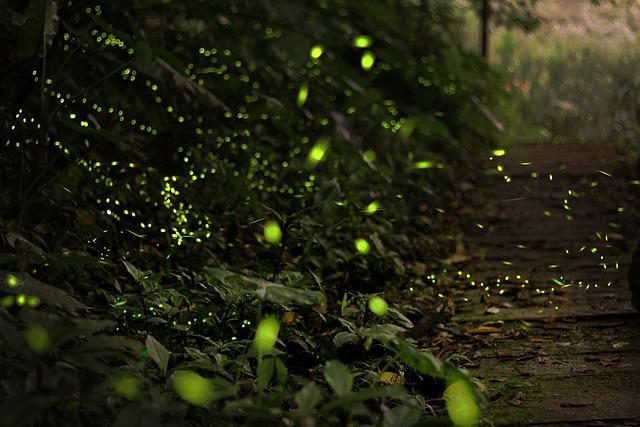
How does a firefly make its own light? The answer involves a chemical reaction with four ingredients. Luciferin is the light-producing compound. Luciferase is the enzyme that triggers the reaction. ATP provides the energy. Oxygen completes the mix. This reaction happens in the firefly's abdomen and produces a cold light with 96% efficiency.
Fireflies flash their light in specific patterns to attract mates. Each species has a unique signal. Males and females find each other by recognizing their own pattern.
Scientists now use this same chemistry to test for signs of life. NASA has explored mixing firefly compounds with samples to detect ATP on other planets. Biologists use luciferase to test how well antibiotics fight tuberculosis.
Hypothesis
The hypothesis is that fireflies use bioluminescence to attract mates and survive.
Fireflies produce light through a chemical reaction with four ingredients: luciferin, luciferase, ATP, and oxygen. The reaction happens in the firefly's abdomen and produces cold light at 96% efficiency. Each species flashes a unique pattern, and males and females find each other by recognizing their own signal. Scientists have extended this chemistry into new territory — NASA has explored mixing firefly compounds with samples to detect ATP on other planets, and biologists use luciferase to test how well antibiotics fight tuberculosis.
Every flash of firefly light runs on ATP — the tiny fuel packet that cells burn to power chemical reactions. Deep in the firefly's abdomen, this cellular fuel drives luciferin and luciferase together, producing a cold light with 96% efficiency. Remove it from the equation, and the reaction stalls: no flash, no light.
Method & Materials
You will observe fireflies and their light patterns, research the process of bioluminescence, and explore the ways in which this process can be used to help us.
You will need a notebook, a pen, a flashlight, and access to the internet.
Eureka Crate — engineering & invention kits for ages 12+ — monthly projects that build real-world skills. (Affiliate link)
The process of bioluminescence is an incredibly efficient way for fireflies to create light. This process has been used to help us in many ways, such as testing for life on other planets and fighting Tuberculosis.
Why do this project?
This science project is so interesting and unique because it explores the fascinating process of bioluminescence and how it can be used to help us.
Also Consider
Experiment variations to consider include testing different light patterns to see how they affect the fireflies' behavior, and exploring different ways in which bioluminescence can be used to help us.
Full project details
Additional information and source material for this project are available below.