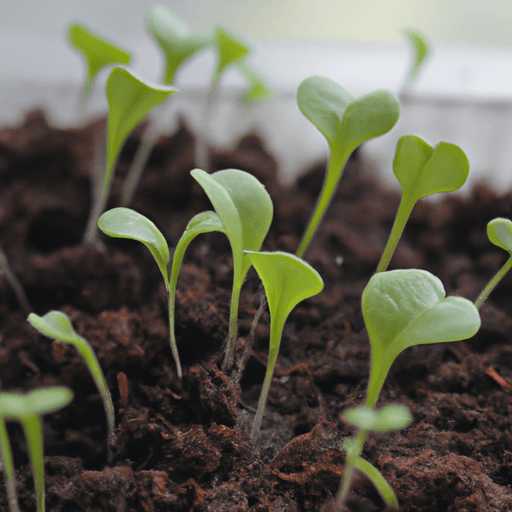
Can a lettuce seed tell you how toxic a solution is? In a reference toxicity test, you expose a living organism to different doses of a chemical. Then you measure the response. Lettuce seeds work well because they either sprout or they do not.
You prepare five salt (NaCl) solutions at different concentrations. You place seeds on moist filter paper in petri dishes soaked with each solution. A set of control dishes gets plain deionized water. After five days in the dark, you count how many seeds sprouted. You also measure each root to the nearest millimeter.
At high salt concentrations, fewer seeds germinate and roots grow shorter. This dose-response pattern shows whether lettuce seeds respond in a predictable way. A bioassay is a test that uses living things to detect harmful substances.
Hypothesis
The hypothesis is that the lettuce seeds will respond in a predictable manner to varying concentrations of salt.
Lettuce seeds make surprisingly capable test organisms. You expose them to different doses of salt, then measure two responses: whether they sprout and how long their roots grow. As concentrations rise, fewer seeds germinate and roots grow shorter — a dose-response pattern that reveals how harmful a substance is to living tissue. That predictable, measurable response is exactly what turns this into a true bioassay, where a living organism's reaction tells you how strong or toxic a substance really is.
When you expose lettuce seeds to different concentrations of salt solution, you can watch a clear pattern unfold. Seeds placed in high-concentration NaCl solutions germinate less often, and the roots that do grow come in shorter. As the dose changes, the biological response changes with it — predictably, measurably. This is what makes the lettuce bioassay useful: a living organism that either sprouts or it doesn't gives you a clean signal about how a substance affects life at different amounts.
Method & Materials
You will treat the lettuce seeds in a bleach solution, label a series of beakers with different concentrations of salt, add the appropriate test solution to each petri dish, add 5 lettuce seeds to each dish, place the dishes in a plastic bag, incubate the seeds in the dark for 5 days, and then count how many seeds have germinated and measure the root length of each.
You will need lettuce seeds, deionized or distilled water, a 0.2M NaCl solution, 9-cm petri dishes, 7.5-cm paper filter, bleach, and a plastic bag.
Eureka Crate — engineering & invention kits for ages 12+ — monthly projects that build real-world skills. (Affiliate link)
After conducting the experiment, we can conclude that the lettuce seeds responded in a predictable manner to varying concentrations of salt. The most interesting observation was that at some threshold concentration, all of the test organisms were killed.
Why do this project?
This science project is interesting because it demonstrates how a simple organism can be used to test the toxicity of a compound.
Also Consider
Experiment variations to consider include testing different compounds and using different concentrations of the same compound.
Full project details
Additional information and source material for this project are available below.