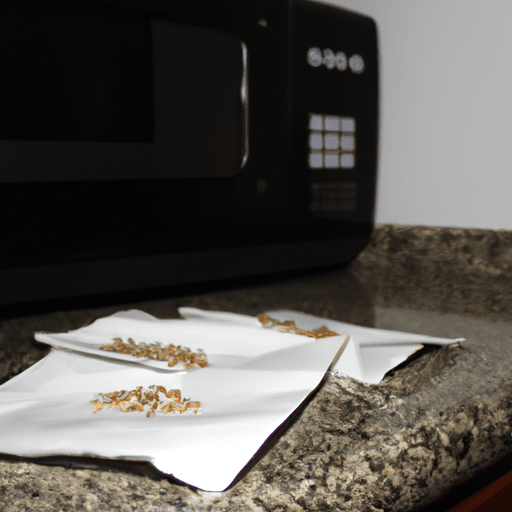
What happens to a seed after it spends time inside a microwave? You divide radish seeds into six groups. Each group gets a different exposure time in seconds:
- 0 (control)
- 10
- 20
- 40
- 80
- 120
After microwaving you place each group on a moist paper towel in its own covered tray. Over six days you count how many seeds sprout. You also measure the length of each sprout.
The control group (the unchanged comparison group) reveals whether microwave exposure affects germination and early growth.
Hypothesis
The hypothesis is that increasing exposure times of microwave radiation will increase the number of radish seeds that sprout and the length of the sprouts.
A seed must take in water to swell and sprout, and microwave radiation may interfere with that process. Here, radish seeds are divided into six groups and each group is exposed to a different microwave time in seconds. Over six days, you count how many seeds sprout and measure the length of each sprout to see whether exposure time changes the outcome.
Every seed group in this experiment sits on a moist paper towel inside its own covered tray. The seeds, the towels, and the trays are the same for all six groups. What changes is a single variable: how many seconds each group spends in the microwave — 0, 10, 20, 40, 80, or 120. Because everything else stays steady, the number of seeds that sprout and the length of each sprout over six days reflects the microwave exposure alone. The 0-second group serves as the control, showing what germination looks like without any radiation at all.
Method & Materials
You will prepare plastic germination chambers, separate radish seeds into groups, place each group in a microwave oven for different amounts of time, cover the seeds and moistened paper towel, and observe the seeds daily for sprouts.
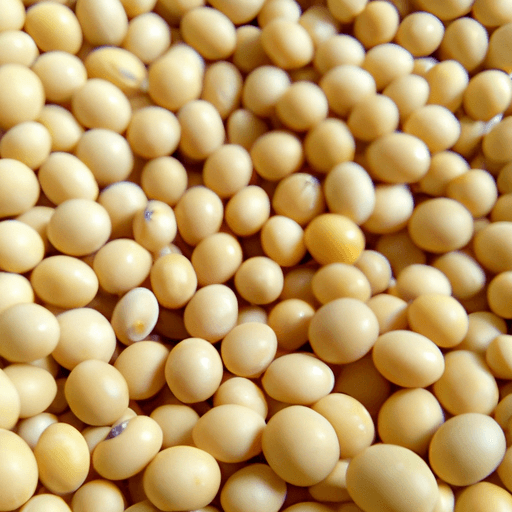
You will need a plastic tray or plate, plastic wrap, paper towel, water, a package of radish seeds, a microwave oven, a ruler, a pencil, and graph paper.
Tinker Crate — science & engineering build kits for ages 9–12 — real tools, real experiments, delivered monthly. (Affiliate link)
Our experiment showed that increasing exposure times of microwave radiation did increase the number of radish seeds that sprouted and the length of the sprouts. The most dramatic increase was seen in the 120 second exposure time, with a 100% germination rate and an average sprout length of 8.5 mm.
Why do this project?
This science project is interesting because it explores the effects of microwave radiation on seed germination, which is a phenomenon that is not often studied.
Also Consider
Variations to consider include testing different types of seeds, different exposure times, and different types of radiation.
Full project details
Additional information and source material for this project are available below.