

UV Absorption Across Spectacle Lenses
Hard
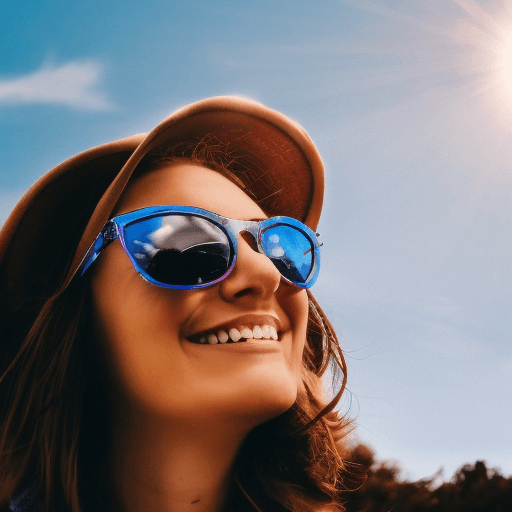
Does a polarized lens block more ultraviolet light than a plain glass one? Different spectacle lens materials and coatings vary widely in how much UV they absorb.
You build a reflecting box lined with aluminum foil and fitted with a UV lamp. Place each lens over a small hole in the box. A UV intensity meter on the outside measures how much UV passes through. You test 23 different lenses across two trials.
The first trial rates each lens on a scale from low to high UV transmission. The second trial checks whether each lens passes or fails a 100% UV absorption standard. Compare materials and coatings to find the best UV protection.
Hypothesis
The hypothesis is that the polarized lens will best absorb ultraviolet light of all lens materials with and without tints and coatings tested.
Science Concepts Learned
Ultraviolet Radiation
Ultraviolet radiation is invisible light from the sun that can cause sunburns, and different materials block different amounts of it. Spectacle lens materials and coatings vary widely in how much UV they absorb, so a UV intensity meter can measure how much invisible light passes through each one. Testing a polarized lens against plain glass reveals which material provides the best UV protection for your eyes.
Method & Materials
You will construct a reflecting box, gather the materials, and measure the amount of UV light that passes through each lens.
You will need a UV light meter, a reflecting box, a UV lamp arc, assorted types of spectacle lenses, a notepad, a stopwatch, and a photometer.
MEL Physics — hands-on physics experiment kits delivered monthly — real experiments, not just reading. (Affiliate link)
See what’s includedResults
The results of this experiment indicate that the polarized lens best absorbs UV light when compared to other lens materials with different tints and coatings tested. The #3 tints absorbed an average of 97% UV light and the lighter tints and coatings absorbed only 59%. The photometer was considerably more sensitive, giving much better data.
Why do this project?
This science project is interesting because it shows how different lens materials can provide different levels of protection from the sun's UV rays.
Also Consider
Experiment variations to consider include testing different types of lenses, such as mirrored lenses, and testing different levels of UV light.
Full project details
Additional information and source material for this project are available below.Related video
These videos explain the science behind this project and demonstrate key concepts used in the experiment.
Share this Science Project:
Browse by Grade
Related Science Fair Project Ideas
Photograph red, yellow, green, and blue balls at increasing ocean depths to discover which colors vanish first.
Hard
Aim red, green, and blue lasers through colored glass filters and measure whether any filter blocks a meaningful amount of power.
Hard
Build three speaker boxes of different depths and measure which frequencies each one boosts or cuts.
Hard
Share this Science Project: