How much bacteria lives on a bathroom door handle? Every person who touches a restroom door leaves behind microbes. A disinfectant wipe might remove them entirely.
You swab the inside and outside handles of restroom doors at six locations. The six locations span three types of venue:
- homes
- restaurants
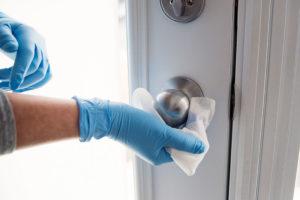
- supermarkets Each swab gets transferred to a blood agar plate. After 48 hours in an incubator at 35 degrees Celsius, you count the bacterial colonies. Then you wipe each handle with a Clorox disinfectant wipe and swab again.
The inside handle carries about 50% more bacteria than the outside. The Clorox wipe reduces the colony count to zero at every location.
Hypothesis
The hypothesis was that the Clorox wipes would reduce the amount of bacteria significantly.
Agar plate culture provides a flat dish of jelly-like food that lets germs collected from real surfaces grow into visible colonies you can count. In this project, swabs from restroom door handles transfer any microbes onto blood agar plates, where the jelly food supports bacterial growth during a 48-hour incubation at 35 degrees Celsius. The resulting colonies on each plate become a measurable record of how much bacteria was living on that handle.
Each colony on a blood agar plate represents bacteria that came from a single touch. You swab inside and outside handles at six locations across homes, restaurants, and supermarkets, then incubate the plates at 35 degrees Celsius for 48 hours before counting. The inside handle carries about 50 percent more bacteria than the outside — a difference that only becomes visible once those invisible microbes grow into groups you can tally. A Clorox disinfectant wipe reduces the colony count to zero at every location.
Incubation means keeping something warm, moist, and aired so living things inside can grow. Bacteria need these same conditions. Swabs go onto blood agar plates and sit in an incubator at 35 degrees Celsius for 48 hours. That steady warmth and moisture let tiny bacterial colonies multiply until they are large enough to count by eye.
Method & Materials
You will go to a restroom, collect bacteria from the door handle, label the swab, and then use a Clorox wipe to clean the door handle.
You will need an incubator, sterile swabs, Petri dishes, blood agar plates, a lab coat, a container of Clorox wipes, and a stopwatch.
Eureka Crate — engineering & invention kits for ages 12+ — monthly projects that build real-world skills. (Affiliate link)
The results showed that there was about 50% more bacteria on the inside of the door handle than the outside, and the Clorox wipes reduced it 100%. There was an equal amount of bacteria in restaurants and supermarkets and there was a little less than a quarter more in the homes.
Why do this project?
This science project is interesting because it shows how effective Clorox wipes can be in reducing the amount of bacteria on door handles.
Also Consider
Experiment variations to consider include using a spray instead of a wipe or towel, and using a heat gun to see if it is an effective tool for killing bacteria on door knobs or other surfaces.
Full project details
Additional information and source material for this project are available below.
These videos explain the science behind this project and demonstrate key concepts used in the experiment.
This video tests for the effectiveness of clorox wipes to kill bacteria on surfaces at home. What other control could demonstrate that the observed effects are specifically caused by the chemicals in the clorox wipes and not merely caused by physically removing the bacteria through wiping?