

Lactase Efficiency at Varying Temperatures
Medium

Does warming a lactose solution help the enzyme lactase break it down faster? Lactase splits lactose (milk sugar) into simpler sugars like glucose. Temperature and concentration both change how well it works.
You prepare lactose solutions at different concentrations. Then you heat each one in small steps of five degrees. At every step, you add lactase enzyme and test for glucose with test strips.
The results show a clear pattern. At lower lactose concentrations, the enzyme reaches peak glucose output at a lower temperature. Heat weakens the bonds in lactose, so the enzyme has less work to do.
Hypothesis
The hypothesis is that as the concentration of lactose is lowered, the temperature at which the maximum amount of glucose is detected becomes lower.
Science Concepts Learned
Lactose Intolerance
Lactose intolerance means your body cannot break down lactose, the sugar in milk. This experiment tests that process by adding lactase enzyme to lactose solutions and measuring glucose with test strips. You vary concentration and temperature to see how each factor affects whether lactase can complete the breakdown.
Method & Materials
You will make a 1M lactose solution, test it with lactase enzyme, and measure the glucose produced. You will then heat the solution in increments of 5 degrees and measure the glucose produced. Finally, you will decrease the concentration of the lactose in increments of .2M and heat the solution in increments of 5 degrees to measure the glucose produced.
You will need lactose sugar, lactase enzyme, a water bath, distilled water, glucose test strips, 10mL test tubes, a 600 mL glass bottle, and dextrose.
Eureka Crate — engineering & invention kits for ages 12+ — monthly projects that build real-world skills. (Affiliate link)
See what’s includedResults
The results showed that as the concentration of the lactose is lowered, the temperature at which the maximum amount of glucose is tested becomes lower. This means that at lower concentrations of lactose, the lactase becomes more efficient.
Why do this project?
This science project is interesting because it shows how temperature and concentration can affect the efficiency of an enzyme.
Also Consider
Experiment variations to consider include testing different concentrations of lactose and different temperatures.
Full project details
Additional information and source material for this project are available below.Related video
These videos explain the science behind this project and demonstrate key concepts used in the experiment.
In this demonstration, the effect of lactase on milk, heated milk, and sucrose was investigated.
Share this Science Project:
Browse by Grade
Related Science Fair Project Ideas

Drop potato-soaked filter paper into hydrogen peroxide at different temperatures and time how fast the enzyme pushes it to the surface.
Medium
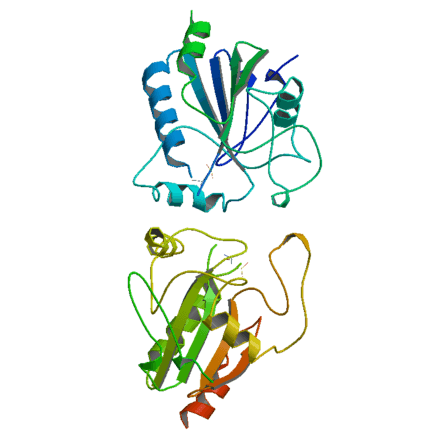
Count the oxygen bubbles a potato cube produces in hydrogen peroxide at eight temperatures to find the point where the enzyme shuts down.
Medium
Pour hydrogen peroxide into liver or potato extract and measure the rising froth to calculate how fast catalase breaks it down.
Medium
Share this Science Project: