Do flowers, leaves, and pinecones follow the same number pattern? You count petals, measure leaf angles, and trace spirals in everyday plants to find out.
Flower petals and vegetable leaves often match Fibonacci numbers. Successive leaves on flowering kale grow at about 137 to 140 degrees apart. That angle is called the Golden Angle.
You also look for Fibonacci spirals in cauliflowers, pinecones, sunflowers, and pineapples. Shells follow a different but equally clear math pattern: equiangular spirals.
Hypothesis
The hypothesis is that there are mathematical relationships in nature.
The Fibonacci sequence builds each number by adding the two before it — a simple rule that turns out to be everywhere in nature. When you count petals on flowers or trace spirals in sunflowers, pinecones, and pineapples, those counts often land on Fibonacci numbers. Successive leaves on flowering kale grow at about 137 to 140 degrees apart, an arrangement linked to ratios within the sequence. That angle is called the Golden Angle.
Successive leaves on flowering kale grow at about 137 to 140 degrees apart — an angle called the Golden Angle. When you measure those leaf angles and count petals that match Fibonacci numbers, the golden ratio emerges from plants you can find in any grocery store.
Successive leaves on flowering kale grow at about 137 to 140 degrees apart — an arrangement called the Golden Angle. That angle is what phyllotaxis describes: the precise pattern leaves follow as they emerge around a stem. When you measure each successive leaf on multiple plants, you can confirm the pattern holds consistently across specimens.
Shells follow a different math pattern than flowers and leaves. When you observe shell shapes in this experiment, you can trace how each whorl expands at a constant angle from the center. That consistent angle is what defines an equiangular spiral — a curve that grows wider while keeping the same angle at every turn, producing the smooth curve visible in nautilus and snail shells.
Method & Materials
You will conduct four experiments to find mathematical relationships: counting the number of flower petals and vegetable leaves, measuring the angle of each successive leaf, looking for spirals in plants, and observing shell shapes.
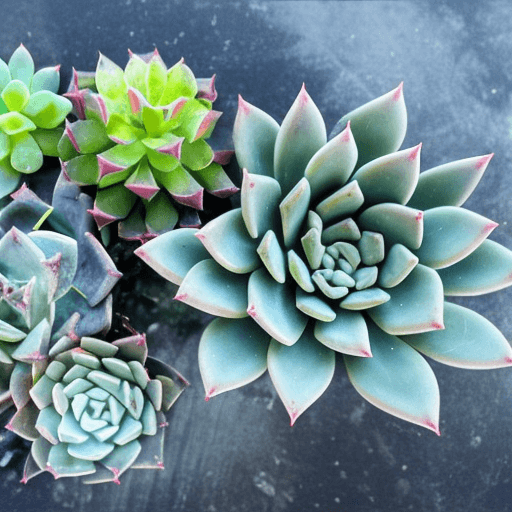
You will need iceberg lettuce, flowering kale, succulents, cauliflowers, a pinecone, a sunflower, a pineapple, and four kinds of shells.
MEL Math — hands-on math experiment kits delivered monthly — makes abstract concepts tangible. (Affiliate link)
The results of this project showed that there are mathematical relationships in nature. Flower petals and vegetables with leaves had relationships with Fibonacci numbers, and all the angles on the successive leaves were from 137-140 degrees, the Golden Angle. Spirals in plants were found to have consecutive Fibonacci numbers in the spirals going clockwise and counter clockwise. Shells were found to be formed in an equiangular and similar manner.
Why do this project?
This science project is so interesting and unique because it shows how mathematics is hidden in nature and how it can be used to explain the patterns and relationships in nature.
Also Consider
Experiment variations to consider include looking for mathematical relationships in the shapes of clouds, the number of spots on animals, and the number of stripes on animals.
Full project details
Additional information and source material for this project are available below.