| Complexity level: | 6 |
| Project cost ($): | 10 |
| Time required: | 6 hours for sunlight exposure, 24 hours incubation period |
| Material availability: | Tap water or rain water are acceptable sources of water. Agar plates are available at school biology laboratories. |
| Safety concerns: |
Hypothesis
The lower the degree of transparency of the plastic bottle surface, the lower the level of disinfection.
Overview
What is Solar Water Disinfection (SODIS)?
Solar Water Disinfection is a method of killing unwanted microorganisms in water by exposing water in sunlight. Usually, clear plastic bottles are filled with water and then left in the sun, exposed to UV ray for hours on end.
This method is accredited by the World Health Organization because it is a cheap and efficient way to produce water safe for drinking and is currently widely used in many third world countries.
Experiments have shown that exposing polluted water to sunlight deactivates disease causing microorganisms due to the UV rays which proves to be deadly for harmful microorganisms.
What types of bottles are suitable for SODIS?
PET, which stands for Polyethylene terephthalate bottles are used in SODIS. PET bottles are used in SODIS because they are light and hard to break. In addition, PET bottles are also easily obtained in many countries. However, certain glass bottles and specifically engineered plastic bags can also be used.
However, over time, these PET bottles may become scratched from overuse. This would cause the plastic to lose its transparency and potentially hindering the potential effects from SODIS.
Scientific Terms
Materials
The materials required for this science fair project are:
- 7 PET Bottles
- 7 liters of Tap Water
- Escherichia Coli bacteria culture
- 7 Agar plates in Petri Dishes
- 7 Syringes
- Sharp object, e.g. penknife, blade etc.
Eureka Crate — engineering & invention kits for ages 12+ — monthly projects that build real-world skills. (Affiliate link)
See what’s includedProcedure
1. For this experiment, the independent variable is the opacity of the bottle. The dependent variable is the quantity of E.Coli colony present in the water. The controls for this experiment are the source of water used, the amount of sunlight exposed to and the amount of E.Coli used in each bottle.
2. Prepare 7 clean PET bottles for the experiment.
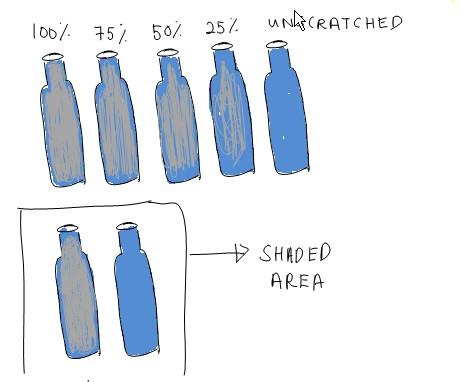
3. Using the sharp object, scratch the outer surface of 4 bottles to four different levels of opacity. They should be about 25% opaque, 50% opaque, 75% opaque and close to 100% opaque.
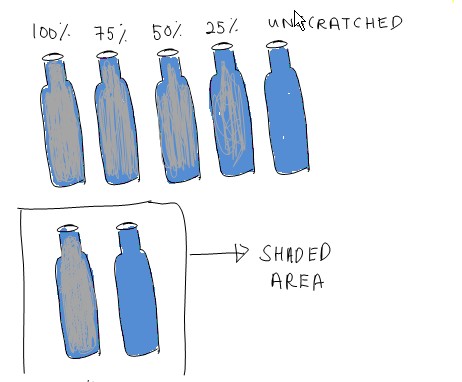
4. Scratch another bottle to 100% opacity.
5. You now have 7 bottles:-
a. 2 x unscratched bottles
b. 1x 25% scratched bottle
c. 1x 50% scratched bottle
d. 1x 75% scratched bottle
e. 2 x 100% scratched bottles
6. Fill all 7 bottles with an equal amount of tap water (about 1 Liter).
7. Next, mix each bottle with 3gm of E.Coli culture and close the bottle cap.
8. Place 5 of the bottles (4 scratched (from step 3) and 1 unscratched) under sunlight for 6 hours.
9. Place the other 2 bottles (1 x 100% scratched and 1 unscratched) in the shade for 6 hours
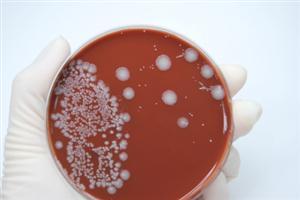
10. 6 hours later (make sure there is continuous exposure of sunlight during the 6 hours period), collect all the bottles and take a sample from each bottle and put 5ml of each sample onto an agar plate.
11. Place the samples into an incubator set at 38 degrees Celsius for 24 hours.
Results
Bottles left in the Sun
| The Degree of Opacity | The quantity of E.Coli colony present (mm) |
| 100% Opaque | 70 |
| 75% Opaque | 50 |
| 50% Opaque | 35 |
| 25% Opaque | 20 |
| Unscratched | 0 |
Bottles left in the Shade
| The Degree of Opacity | The quantity of E.Coli colony present (mm) |
| 100% Opaque | 72 |
| Unscratched | 74 |
Conclusion
The hypothesis is valid because the amount of bacteria increases as the degree of opacity increases.
This study proves to be important for those countries using SODIS as a method for disinfecting drinking water. If the bottles are not well maintained, the benefits of SODIS would be lost and the people would ingest bacteria that may be harmful for them. As many diarrhea generating pathogens are found in water, the SODIS method (if carried out correctly) can help eliminate or minimize diarrhea -related deaths.
Also consider
What happens if bottles made from other material are used?
How can you make sure the PET bottles are 100% clean before carrying out the experiment?
What controls of the experiment should you take into consideration besides the ones mentioned above?
References
http://www.sodis.ch/methode/anwendung/index_EN
http://www.jalmandir.com/uv/sodis/sodis-process.html
http://www.rcsi.ie/sodis/about/background.htm
http://en.wikipedia.org/wiki/Polyethylene_terephthalate#Uses