Javelin Release Angle and Distance
Hypothesis
Science Concepts Learned
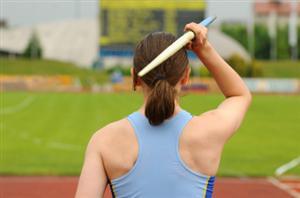
The release angle shapes the curved path a javelin follows through the air, and that path determines how far it travels. Three trained athletes each throw at six different angles ranging from 20 to 45 degrees, with a video camera recording each throw so the actual release angle can be measured on playback. For all three athletes, the longest throws happen at a 35-degree release angle — throws above or below that angle cover less distance. The results show that projectile motion has an optimal launch angle for maximum range, and it sits closer to 35 degrees than the intuitive guess of 45.
Aim too high or too low and a javelin loses distance. Three trained athletes each throw a javelin at six different angles ranging from 20 to 45 degrees, while a video camera records every throw so the actual release angle can be measured on playback. For all three athletes, the longest throws consistently happen at a 35-degree release angle. Throws above or below that point cover less ground, confirming that a specific launch angle maximizes range — and that the optimal angle is not the steepest one.
Method & Materials
MEL Physics — hands-on physics experiment kits delivered monthly — real experiments, not just reading. (Affiliate link)
See what’s includedResults
Why do this project?
Also Consider
Full project details
Additional information and source material for this project are available below.Related videos
Browse by Grade
Related Science Fair Project Ideas