Search for Science Fair Projects

1000 Science Fair Projects with Complete Instructions

General Chemistry Science Fair Project

Metal Combinations in Galvanic Cells
Medium
Metal Combinations in Galvanic Cells | Science Fair Projects | STEM Projects
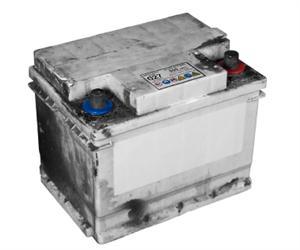
Can you make electricity from two different metals and a salt solution? A galvanic cell (a simple battery) works by placing two metals in separate solutions. A salt bridge connects the solutions and lets charge flow. You test three metal pairs: lead-copper, copper-zinc, and zinc-lead. Each pair sits in matching sulfide solutions. A digital voltmeter measures the voltage each pair produces. The lead-copper pair generates the highest voltage at 0.473 V. The zinc-lead pair produces the lowest at 0.049 V.

Hypothesis

The hypothesis is that the combination of lead and copper in a Galvanic cell will produce the highest voltage.

Method & Materials

You will use three beakers, three salt bridges, zinc sulfide, copper sulfide, lead sulfide, zinc plate, copper plate, lead plate, two jumper wires with crocodile clips, a digital voltmeter, and a marker pen. You will place the metal electrodes in the beakers according to the electrolyte solutions. Then, you will connect the two electrodes with a salt bridge or porous cup and measure the voltage produced by the Galvanic cell with the digital voltmeter.
You will need three beakers, three salt bridges, zinc sulfide, copper sulfide, lead sulfide, zinc plate, copper plate, lead plate, two jumper wires with crocodile clips, a digital voltmeter, and a marker pen.

MEL Chemistry — monthly chemistry experiment kits delivered to your door. (Affiliate link)

See whats included

Results

The results showed that the lead and copper combination produced the highest voltage. This proves that the hypothesis was correct.

Why do this project?

This science project is interesting and unique because it allows students to explore the power of electricity and learn how it works.

Also Consider

Experiment variations include using electrodes of different dimensions and using different types of metal electrodes and solutions. You can also repeat the experiment at different room temperatures and compare the measured voltages.

Full project details

Additional information and source material for this project are available below.

Related videos

These videos explain the science behind this project and demonstrate key concepts used in the experiment.
Share this Science Project:

Related Science Fair Project Ideas

Red Cabbage pH Lava Lamp
Add Alka-Seltzer to a red cabbage lava lamp and watch the blobs shift color as you change the pH.
Medium
Rainbow Borax Crystals
Grow sparkling rainbow crystals overnight on pipe cleaners and watch solid crystal structures form as the Borax water cools.
Medium
Borax Geode Crystals
Turn a hollow eggshell into a miniature geode by growing Borax crystals inside it overnight.
Medium
Share this Science Project: