How quickly do biodegradable spoons actually break down in soil? Products labeled "biodegradable" promise to decompose. This project measures whether that claim holds up in 30 days.
You weigh spoons made from corn starch. You also weigh wheat-based spoons and regular plastic ones. Then you bury them in moist garden soil for 30 days. After digging them up, you weigh them again. You calculate the percentage of weight each type lost.
The results reveal which materials decomposed and which stayed unchanged.
Hypothesis
The hypothesis is that biodegradable spoons lose some of their weight as quickly as within 30 days after being kept in soil.
Products labeled "biodegradable" claim they will decompose, but how fast does that actually happen? Bury corn starch spoons, wheat-based spoons, and regular plastic spoons in moist garden soil for 30 days. Weigh them before and after to calculate the percentage of weight each type lost.
Products labeled biodegradable promise to break down into soil, but do they hold up in 30 days? Weigh spoons made from corn starch, wheat-based spoons, and regular plastic ones. Then bury them in moist garden soil for 30 days. After digging them up, weigh each type again and calculate the percentage of weight lost. The results reveal which materials decomposed and which stayed unchanged.
Method & Materials
You will mark 10 pieces of each type of spoon, measure the weight of each type of spoon, plant the spoons in soil, and measure the weight of the spoons after 30 days.
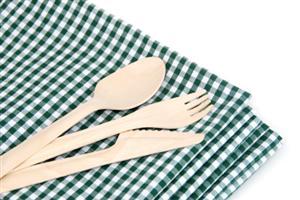
You will need 10 pieces of corn starch-based bio-degradable spoons, 10 pieces of wheat-based bio-degradable spoons, 10 pieces of plastic spoons, a digital weighing scale, soil, water, and a black marker pen.
Tinker Crate — science & engineering build kits for ages 9–12 — real tools, real experiments, delivered monthly. (Affiliate link)
The results showed that the weight of the corn starch based spoon and wheat based spoon had reduced after 30 days in the soil but the weight of the plastic spoon remained the same. This proves that biodegradable spoons can decompose in soil in just 30 days.
Why do this project?
This science project is interesting because it shows how biodegradable spoons can decompose in soil in just 30 days, which is much faster than regular plastic spoons.
Also Consider
Consider repeating the experiment with different environments for decomposition, such as by immersing the plastic in lake water or vegetable oil. For a shorter project, you can set up several spoons and take them out on different days to see how much they have decomposed. You could also try repeating the science project with other types or brands of biodegradable spoons, or by introducing specific species of bacteria into the soil.
Full project details
Additional information and source material for this project are available below.
These videos explain the science behind this project and demonstrate key concepts used in the experiment.
9-Month Long Biodegradable Spoon Experiment: Observing Spoon Decomposition in Different Liquids!" It is crucial to avoid touching the liquids, particularly the drain cleaner, after the lengthy 9-month incubation period. Let's see what happens to the biodegradable spudware spoons!
2-year Long Biodegradable Spoon Experiment: The spudware spoons proved their durability by withstanding the harsh effects of drain cleaner for almost 2 years! The spoon that decomposed the most in compost showed promise for decomposing biodegradable utensils in soil. However, a major issue with the experiment in this video is that limited oxygen inside the ziplock bags may have hindered decomposition, emphasizing the need to consider optimal conditions for decomposition.
This remarkable innovation offers a sustainable solution to single-use plastic utensils while also providing a unique edible experience.