

Thermal Insulation: Three Materials Compared
Medium
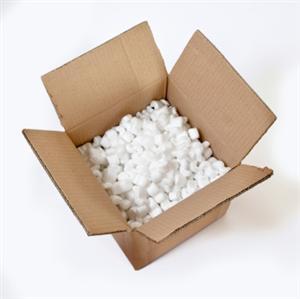
What happens when you wrap a flask of boiling water in different materials? Some materials trap heat much better than others. The best insulators slow down heat loss for hours.
You place three flasks of boiling water inside wooden boxes. One box stays empty (air only). One is packed with Styrofoam. The third is filled with sand. You read each thermometer every hour for five hours.
The Styrofoam-packed flask stays warm the longest. Sand comes in second. The air-only flask cools down the fastest.
Hypothesis
The hypothesis is that sand is able to keep water warm for the longest period of time, when compared to air and Styrofoam.
Method & Materials
You will use an electric drill to make a hole in the center of three corks. You will insert thermometers through the holes and close the opening on the top of the conical flask with the corks. You will place the first conical flask in an empty wooden box, the second conical flask in a wooden box filled with styrofoam, and the third conical flask in a wooden box filled with sand.
You will need 3 conical flasks, 3 corks, an electric drill with bits of the right size, 3 thermometers, 3 wooden boxes, a bag of sand, a bag of styrofoam balls or fibre, tap water, an electric kettle, and a clock.
MEL Physics — hands-on physics experiment kits delivered monthly — real experiments, not just reading. (Affiliate link)
See what’s includedResults
The experiment showed that the water in the conical flask remained warm for the longest period of time in the box filled with the styrofoam, followed by the box filled with sand. This proves that the hypothesis is not true.
Why do this project?
This science project is interesting because it shows how different materials can be used to insulate heat and keep objects warm or cold.
Also Consider
Consider repeating the experiment using ice cubes instead of boiled water. You could also repeat the experiment using other insulation materials like cloth, newspaper or saw dust.
Full project details
Additional information and source material for this project are available below.Related videos
These videos explain the science behind this project and demonstrate key concepts used in the experiment.
Share this Science Project:
Browse by Grade
Featured In
Related Science Fair Project Ideas
Drop food coloring into three jars of different temperature water and watch the color spread at wildly different speeds.
Medium
Burn equal pieces of oak, maple, cedar, and pine under water to discover which wood type produces the most heat.
Medium
Compare water in a wide plate versus a narrow glass, sun versus shade, and fan versus still air to see what speeds up evaporation.
Medium
Share this Science Project: