How does warming seawater change its pH and saltiness? As oceans absorb heat, the water's chemistry shifts. This project measures those changes in a controlled setting.
You fill ten beakers with seawater and heat each one to a different temperature, from 20 to 65 degrees Celsius. After 24 hours you measure the water level, pH, and specific gravity (density compared to pure water) in each beaker.
The warmer beakers lose more water to evaporation. Both pH and specific gravity rise as the temperature goes up.
Hypothesis
The hypothesis is that increasing temperature causes the pH and salinity of seawater to increase.
Temperature changes how much stuff is packed into a given volume of seawater. When you heat seawater, some water escapes as vapor. The remaining salts and minerals are now concentrated in less liquid — so the specific gravity (density compared to pure water) rises. You heat ten beakers of seawater to different temperatures, from 20 to 65 degrees Celsius, and measure the water level and specific gravity after 24 hours. The warmer beakers lose more water to evaporation, and both pH and specific gravity rise as the temperature goes up.
This project starts with a pail of seawater, which has salt mixed in naturally. You heat the seawater across a range of 20 to 65 degrees Celsius, using ten beakers, and track how warming seawater shifts both its pH and saltiness.
The hypothesis predicts that salinity rises with temperature. Specific gravity — a number that tells you how heavy the water is compared to plain water — is the measurement that tracks that salinity change as the seawater warms.
Method & Materials
You will fill 10 beakers with seawater, measure the viscosity and pH levels, place a thermometer in each beaker, and place each beaker on a hot plate. You will regulate the hot plate so that the seawater in each beaker will reach a temperature of 20 °C, 25 °C, 30 °C, 35 °C, 40 °C, 45 °C, 50 °C, 55 °C, 60 °C and 65 °C respectively.
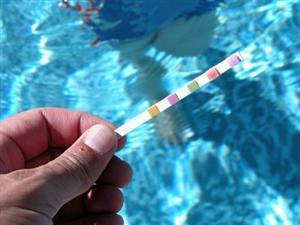
You will need 10 beakers of the same size, 1 pail of seawater, 1 ruler, 10 hotplates, 10 thermometers, pH paper, and a hygrometer.
Eureka Crate — engineering & invention kits for ages 12+ — monthly projects that build real-world skills. (Affiliate link)
After 24 hours, the results showed that the level of water fell as the temperature of the seawater increased, indicating a higher rate of evaporation. The increasing temperature also increased the specific gravity and the pH of the seawater.
Why do this project?
By testing the effects of increasing temperatures on seawater, this experiment reveals a worrisome impact of global warming on ocean health.
Also Consider
Experiment variations include placing a fan in front of a basin containing the seawater, and repeating the experiment using containers with different surface areas, like pails or large trays.
Full project details
Additional information and source material for this project are available below.
These videos explain the science behind this project and demonstrate key concepts used in the experiment.
As a marine biologist in the Maldives explains, rising ocean temperatures have far-reaching consequences for our precious marine ecosystems. This includes the devastating effects on coral reefs, changes in wave patterns, increased erosion, and the survival of various ocean species. It's a heartbreaking reality that we must take action to address before it's too late.
National Geographic's video brings attention to the global coral crisis, revealing the heart-wrenching reality of the devastating effects caused by rising ocean temperatures - just one of the many far-reaching impacts of climate change. This serves as a critical reminder of the urgent need to protect our planet's delicate ecosystems.