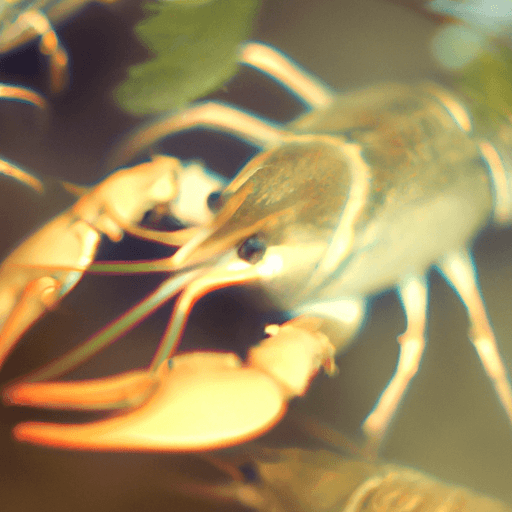
Most crayfish choose darkness over light when given the option. This project tests that preference by splitting an aquarium into a bright side and a dark side.
You divide an aquarium with a foam wall that has a small opening. One half is covered with black paper. The other half gets a 60-watt light placed above it. You place crayfish on the lit side and record their positions every five minutes.
You repeat the test by starting the crayfish on the dark side. After several trials you compare where most crayfish ended up each time.
Hypothesis
The hypothesis is that the majority of the Crayfish will move toward the darkness, and reject the bright light.
Animals act on strong preferences when given a choice between environments. Most crayfish choose darkness over light when given the option. Dividing an aquarium into a bright side and a dark side reveals how crayfish respond to that choice.
Habitat preference can show up as a strong pull toward one condition. Most crayfish choose darkness over light when given the option. Splitting an aquarium into a bright side and a dark side and tracking crayfish positions shows that the majority move toward the darkness and reject the bright light.
Some animals actively move away from bright areas. An aquarium was divided by a foam wall with a small opening: one half covered in black paper, the other lit by a 60-watt light. Crayfish placed on the lit side moved toward the darkness and rejected the bright light. When the test was repeated starting from the dark side, the result was the same — most crayfish ended up in the dark half.
Method & Materials
You will need to collect materials, divide an aquarium into two parts, cover the bottom of each area with rocks and water, cover the top of one area with thick, black paper, place a 60-watt light bulb in a reading light, and place the crayfish in one side.
You will need 7 Northern Crayfish, an aquarium, rocks, water, a foam divider, and a 60-watt light bulb.
Tinker Crate — science & engineering build kits for ages 9–12 — real tools, real experiments, delivered monthly. (Affiliate link)
The results showed that the majority of the Crayfish ended in the dark area, regardless of where they were placed in the beginning of the experiment. This indicates that the hypothesis should be accepted.
Why do this project?
This science project is interesting because it helps us understand how Crayfish react to light, which can be useful for people who raise or sell Crayfish.
Also Consider
Variations to consider include changing the distance of the light from the Crayfish, or changing the intensity of the light.
Full project details
Additional information and source material for this project are available below.