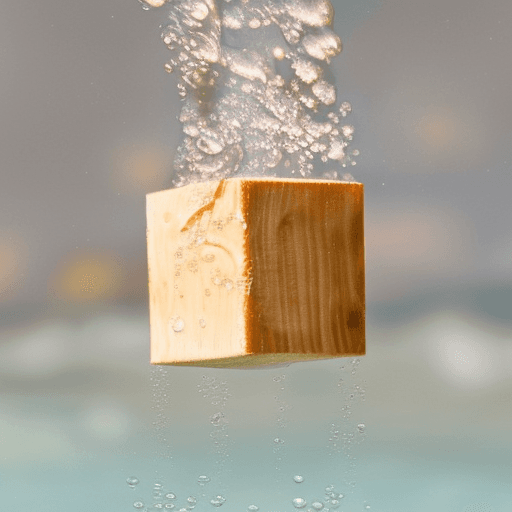
Why does a cone drop through water faster than a cube of the same weight? The shape of an object changes how easily water flows around it. A streamlined shape meets less resistance (drag) on the way down.
You carve four wooden shapes:
- a cone
- a sphere
- a cylinder
- a cube
Each shape is drilled and filled with the same mass of metal shot. You drop them into a tall water tube and time each one.
The cone sank fastest at every weight. The cylinder sank slowest. The sphere and cube fell somewhere in between. Heavier versions of each shape also sank faster.
Hypothesis
The hypothesis is that a shape with heavier mass will sink at a faster rate than that of a lighter weight in the water tube, and that a shape with more streamlined hydrodynamic properties will sink at a faster rate in a water tube.
Drag depends on shape. Water pushes harder against some forms than others. A streamlined shape meets less resistance on the way down through water. A cone sank fastest at every weight because water flows smoothly around its pointed front. A cylinder sank slowest because its flat face forces water to push back harder.
Water pushes against objects as they move through it, and shape determines how much resistance they meet. A streamlined shape like a cone meets less resistance on the way down than a cube of the same weight. When you drop four wooden shapes into a tall water tube, the cone sinks fastest because water flows around it more easily.
Method & Materials
You will make four pyramids, four spheres, four cubes, and four cylinders. You will drill the core out of each shape and fill each one with a different amount of shot. You will then fill the tube with water and drop the shapes one at a time, recording the data.
You will need a foot of clear plastic tube, one person to drop items, four wood spheres, four wood cones, four wood cylinders, four wood cubes, and a stopwatch.
MEL Physics — hands-on physics experiment kits delivered monthly — real experiments, not just reading. (Affiliate link)
The results show that the more streamlined an object is, the faster it will fall through water. The cone fell the fastest, the cylinder fell the slowest, and the cube and spherical shape fell somewhere in between.
Why do this project?
This science project is interesting because it can help us create new and modified hull shapes for submarines and boats so they can travel more quickly and more efficiently.
Also Consider
Experiment variations to consider include testing different shapes and sizes of objects, testing different amounts of water in the tube, and testing different materials for the objects.
Full project details
Additional information and source material for this project are available below.